








































Complete the form below and our dedicated art consultants will contact you with personalised guidance on this artwork.
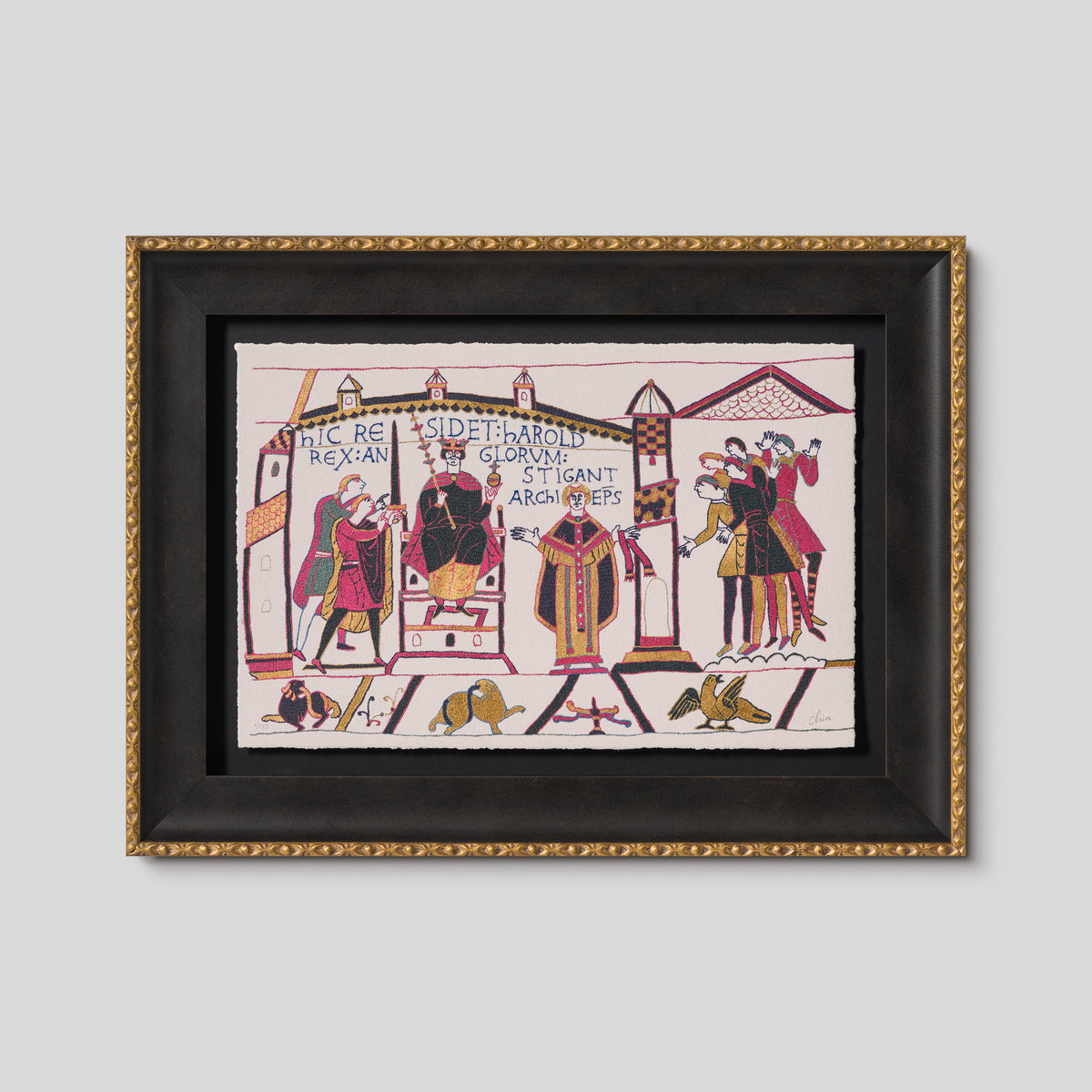
Framed: 26.77 x 19.88 in | 68.0 x 50.5 cm
Free UK delivery
Art Consultation
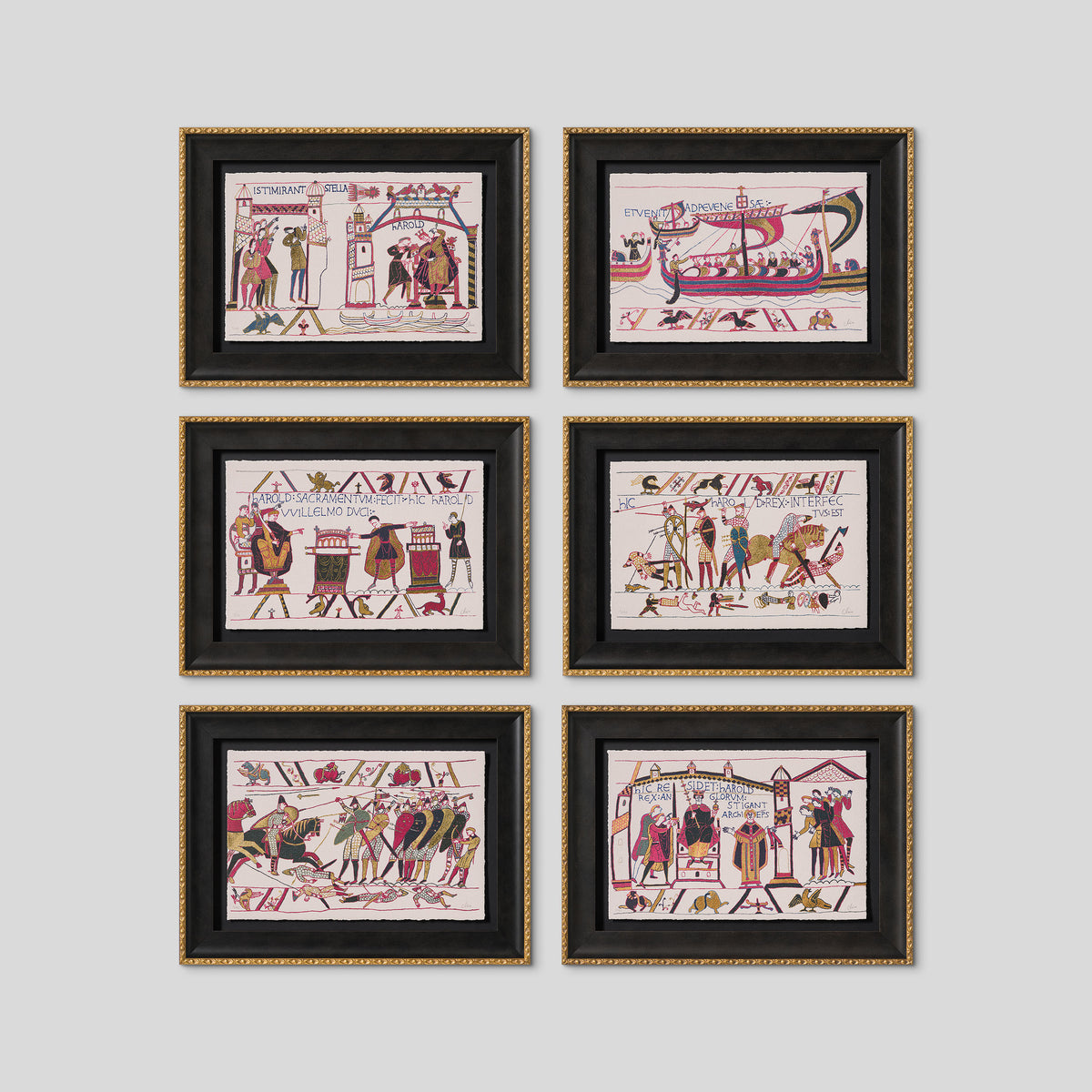
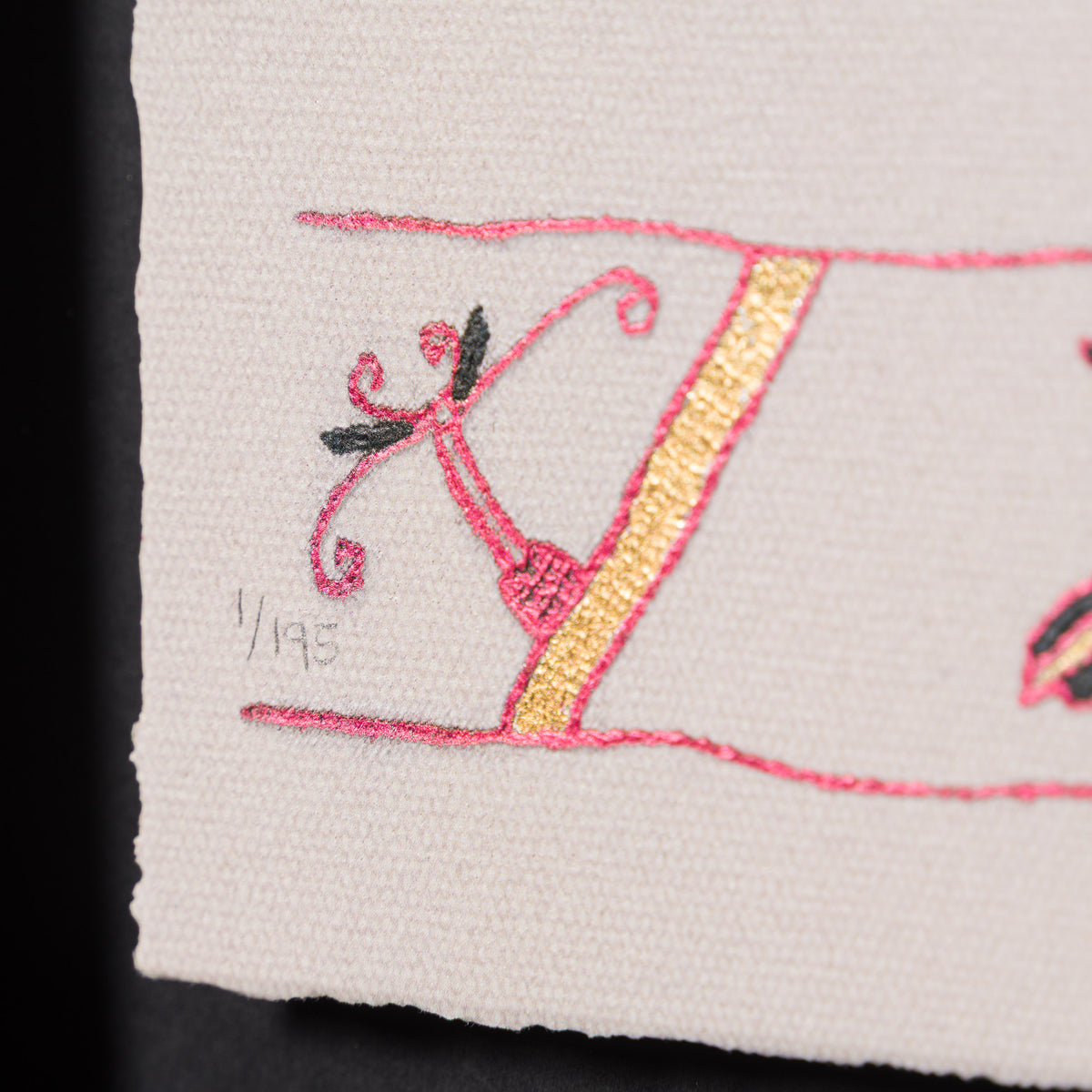
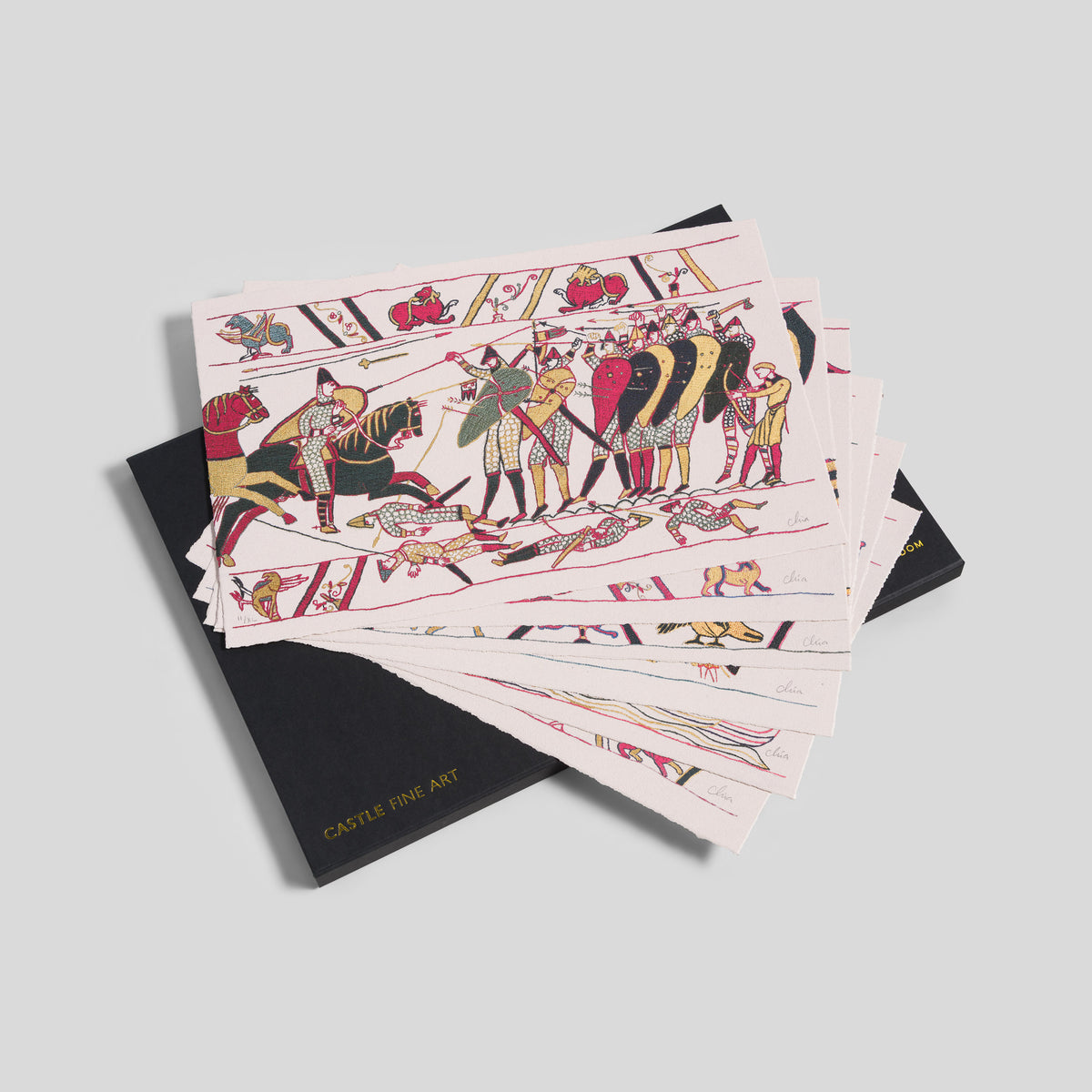
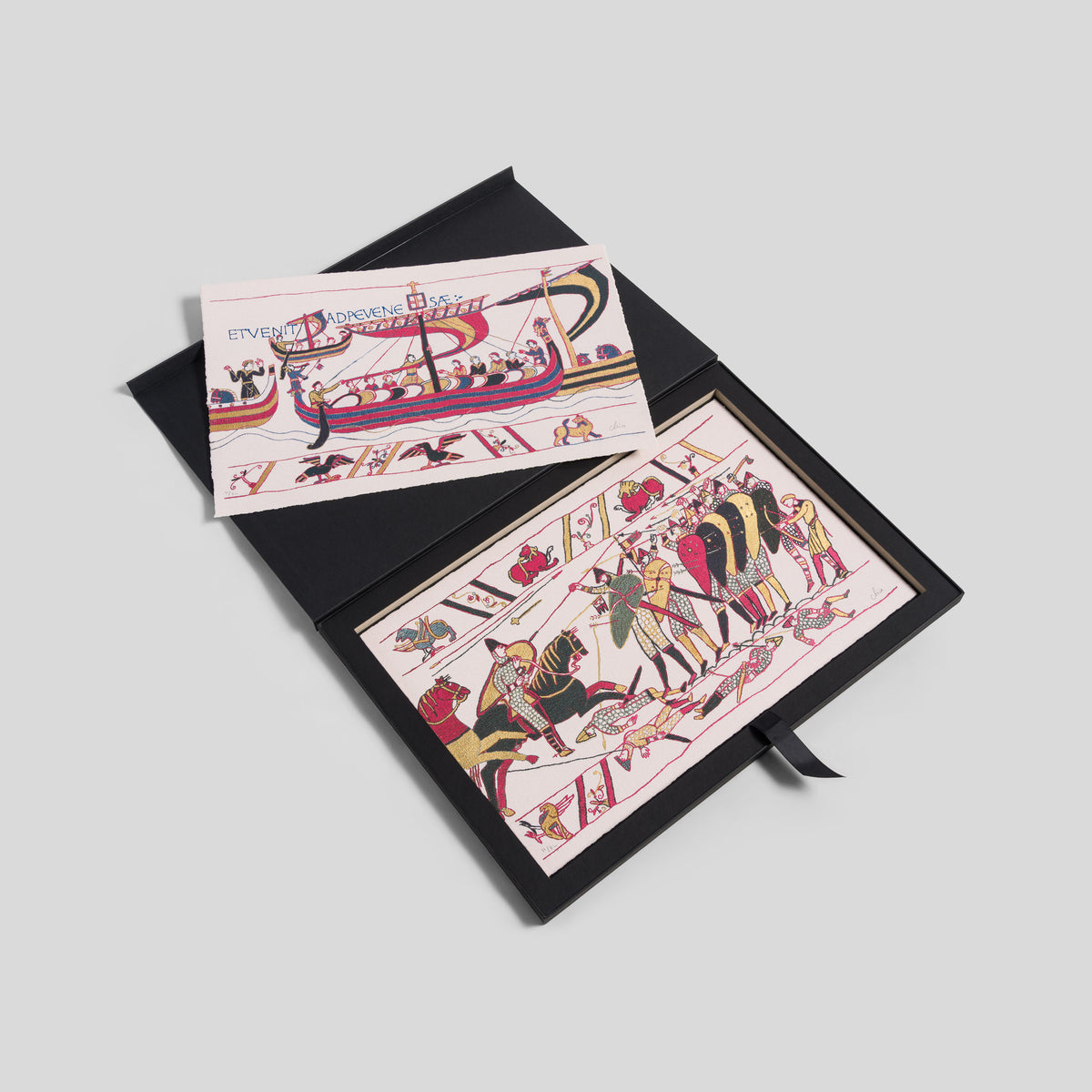
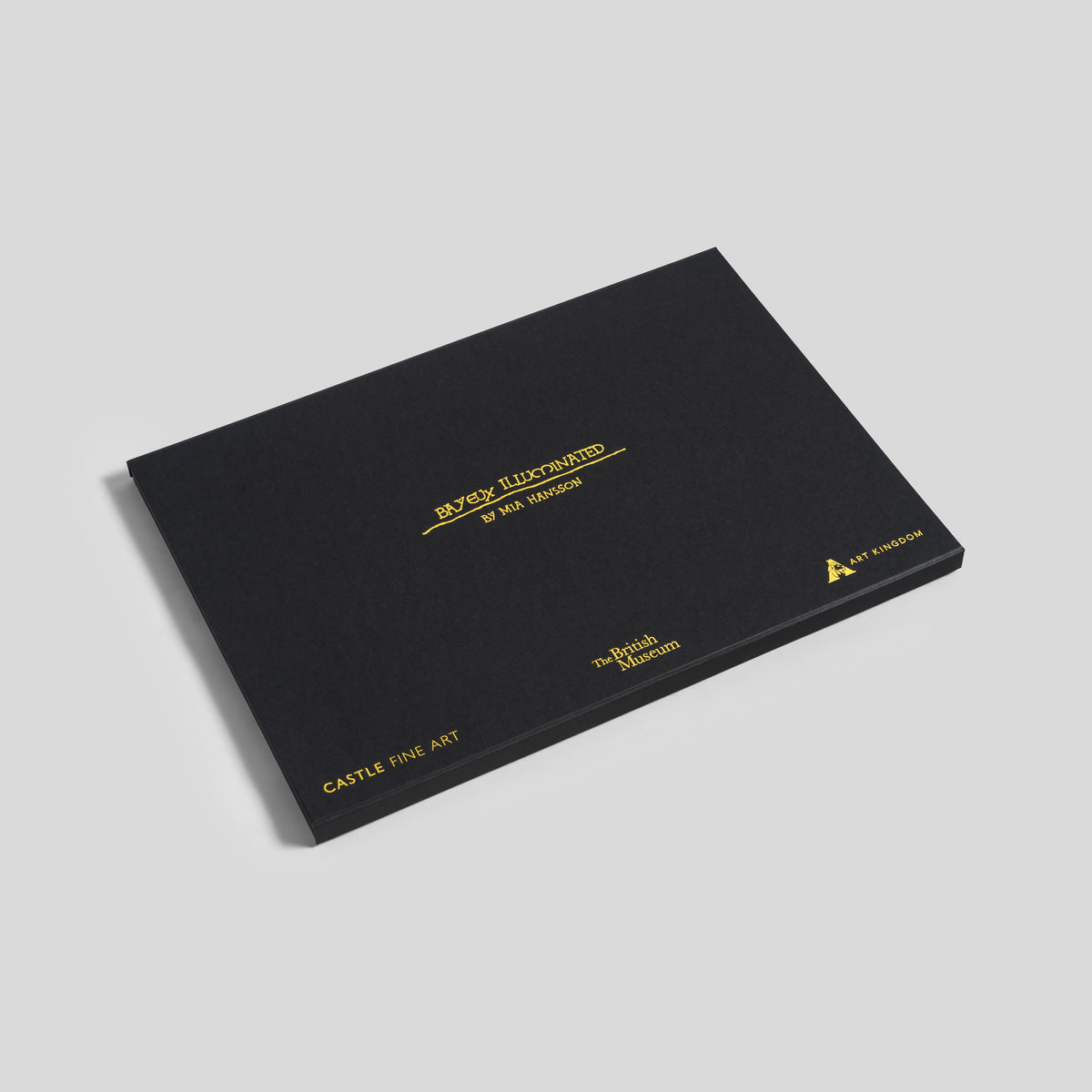
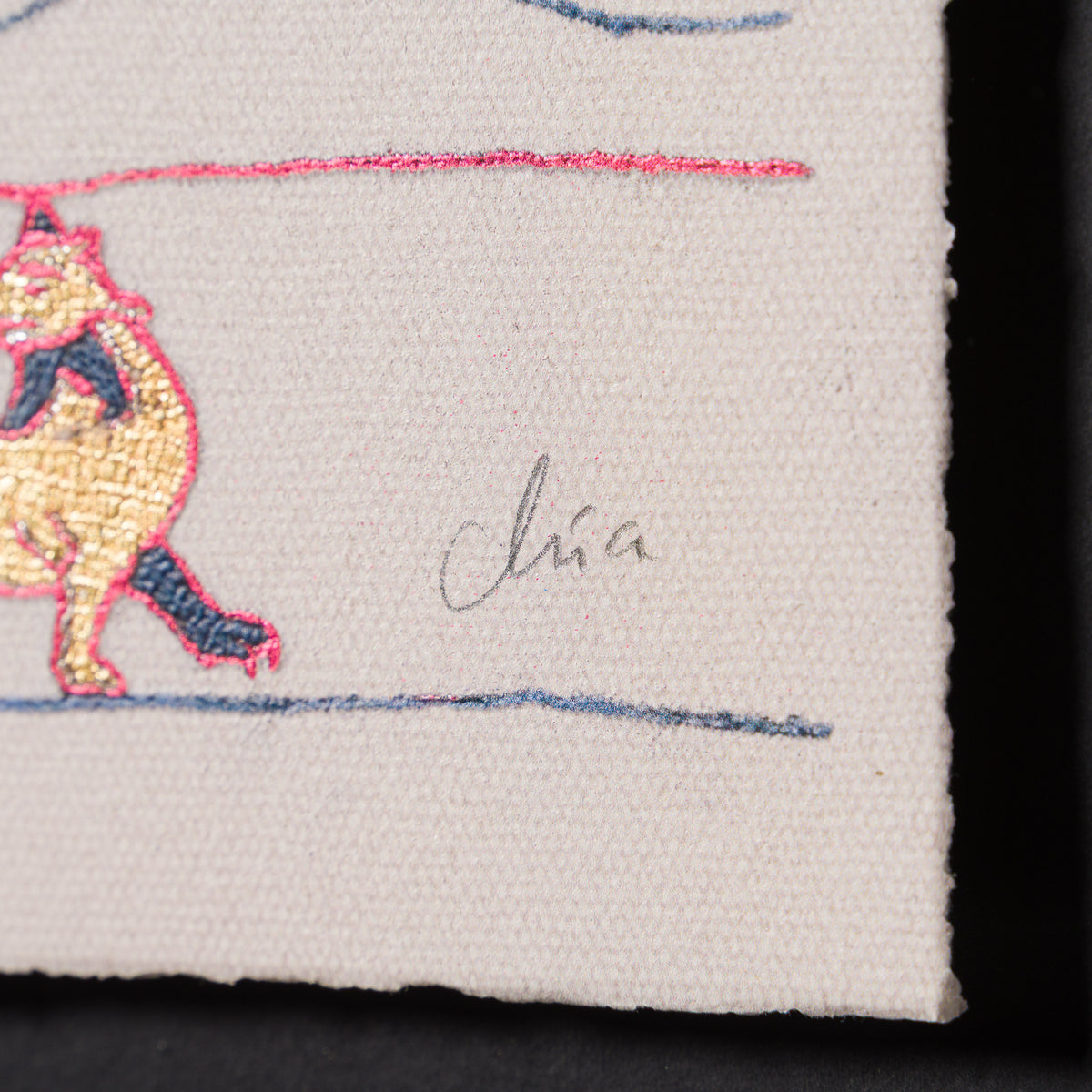
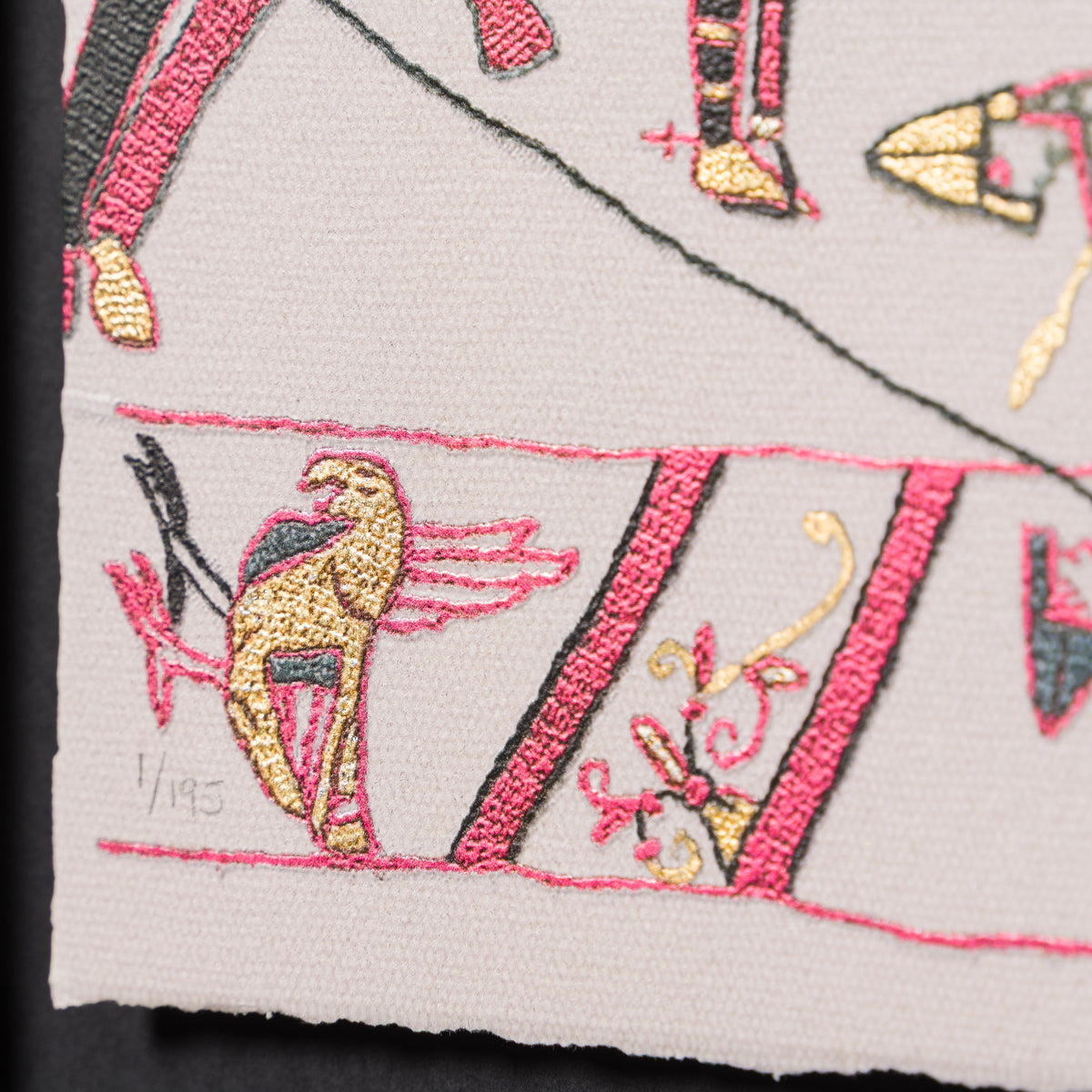
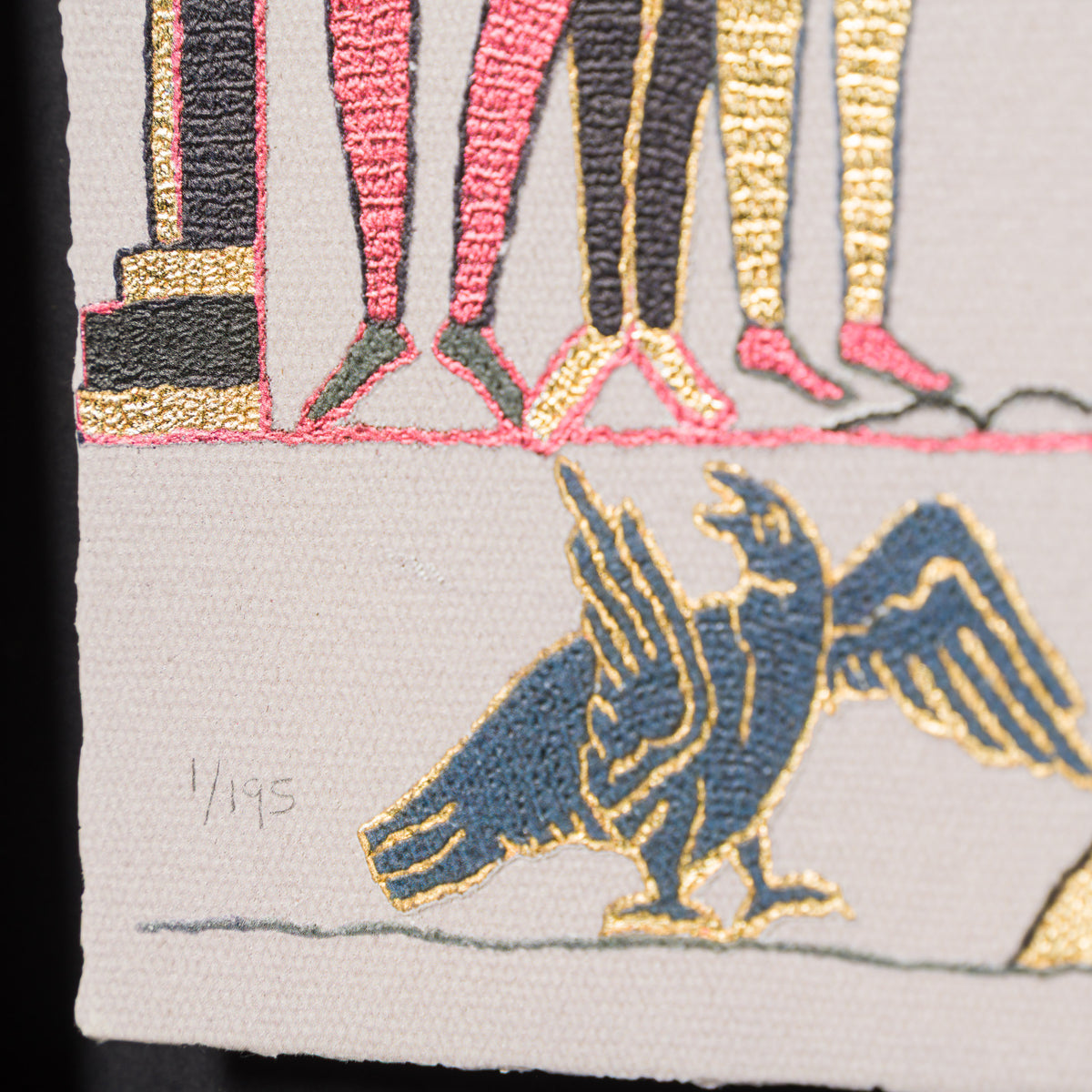
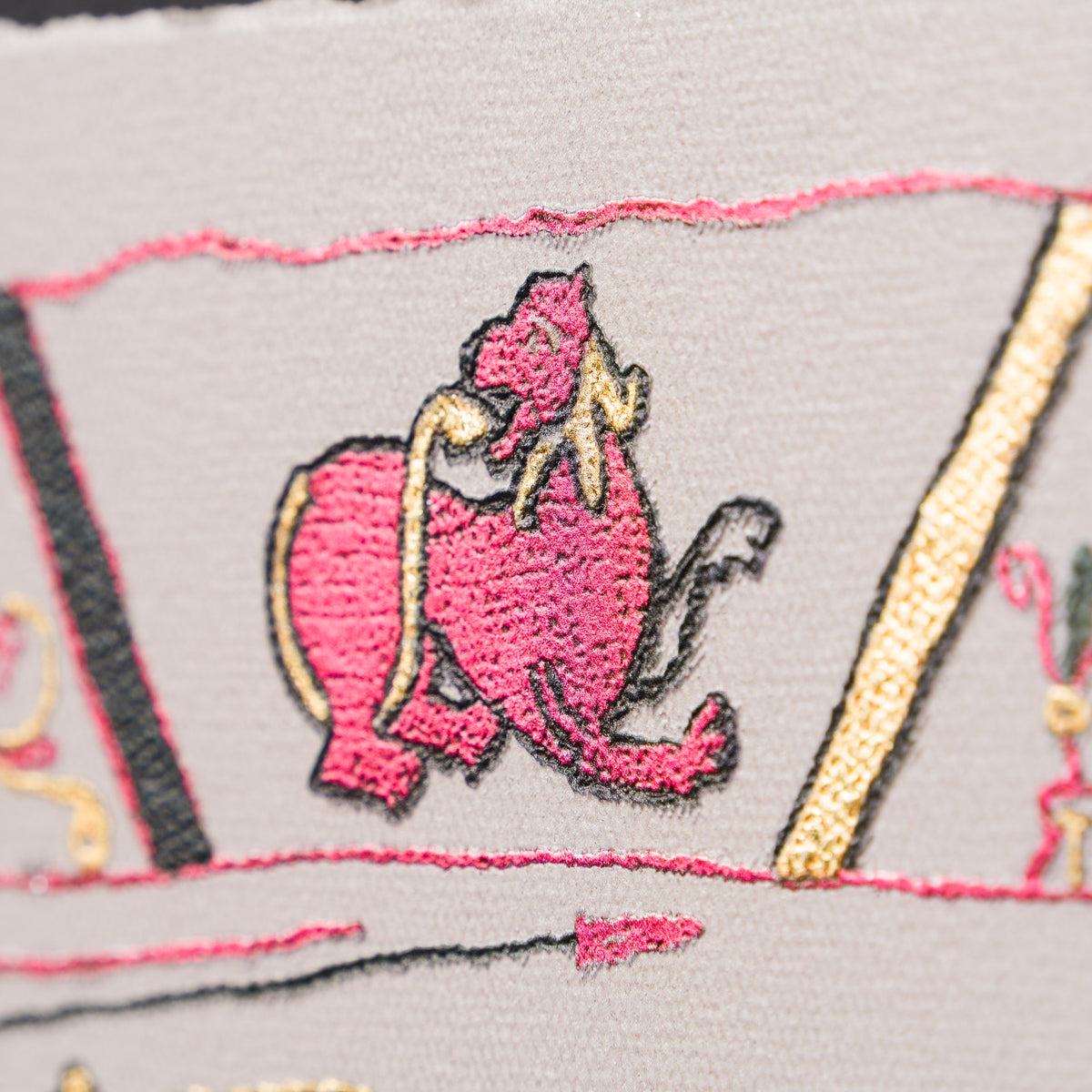
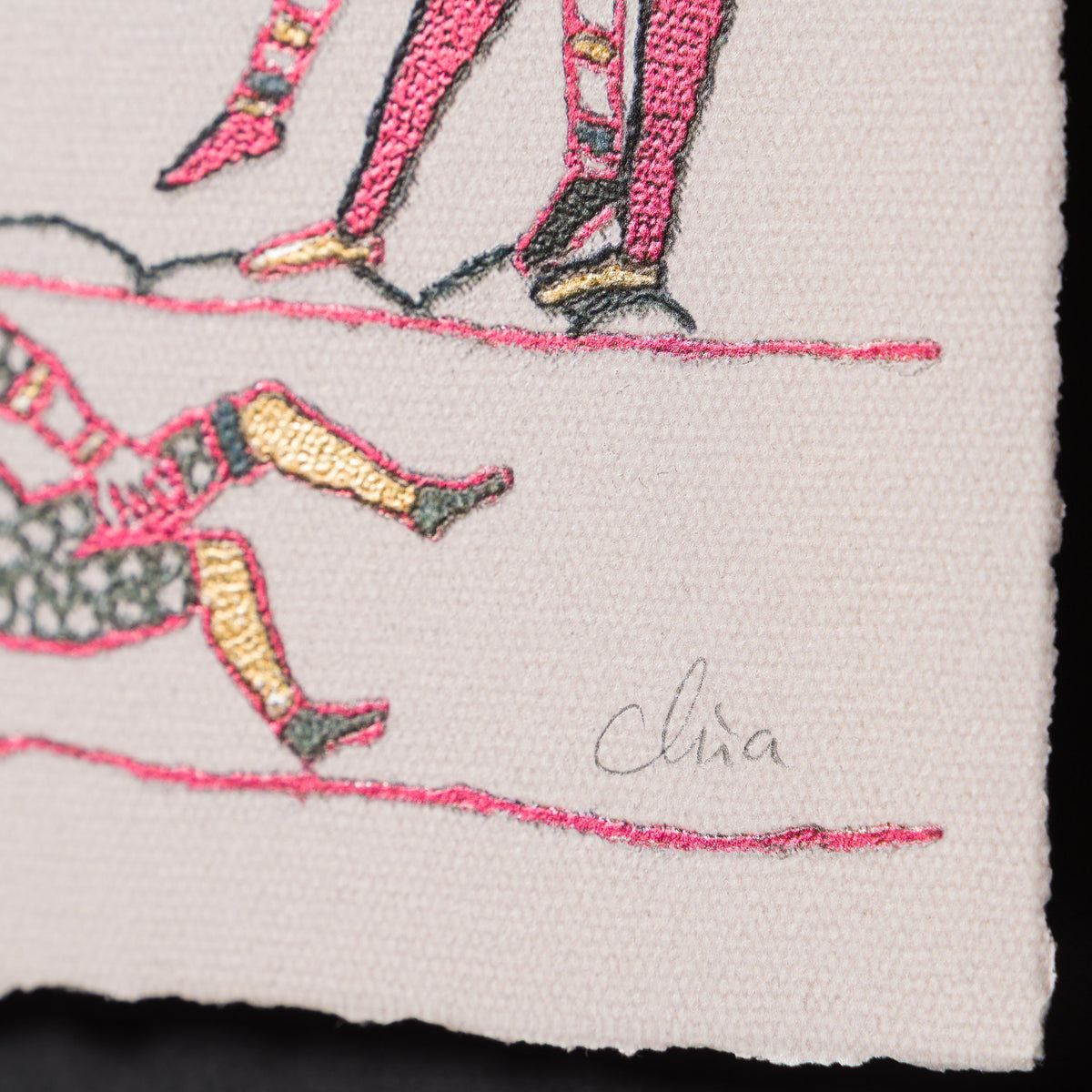
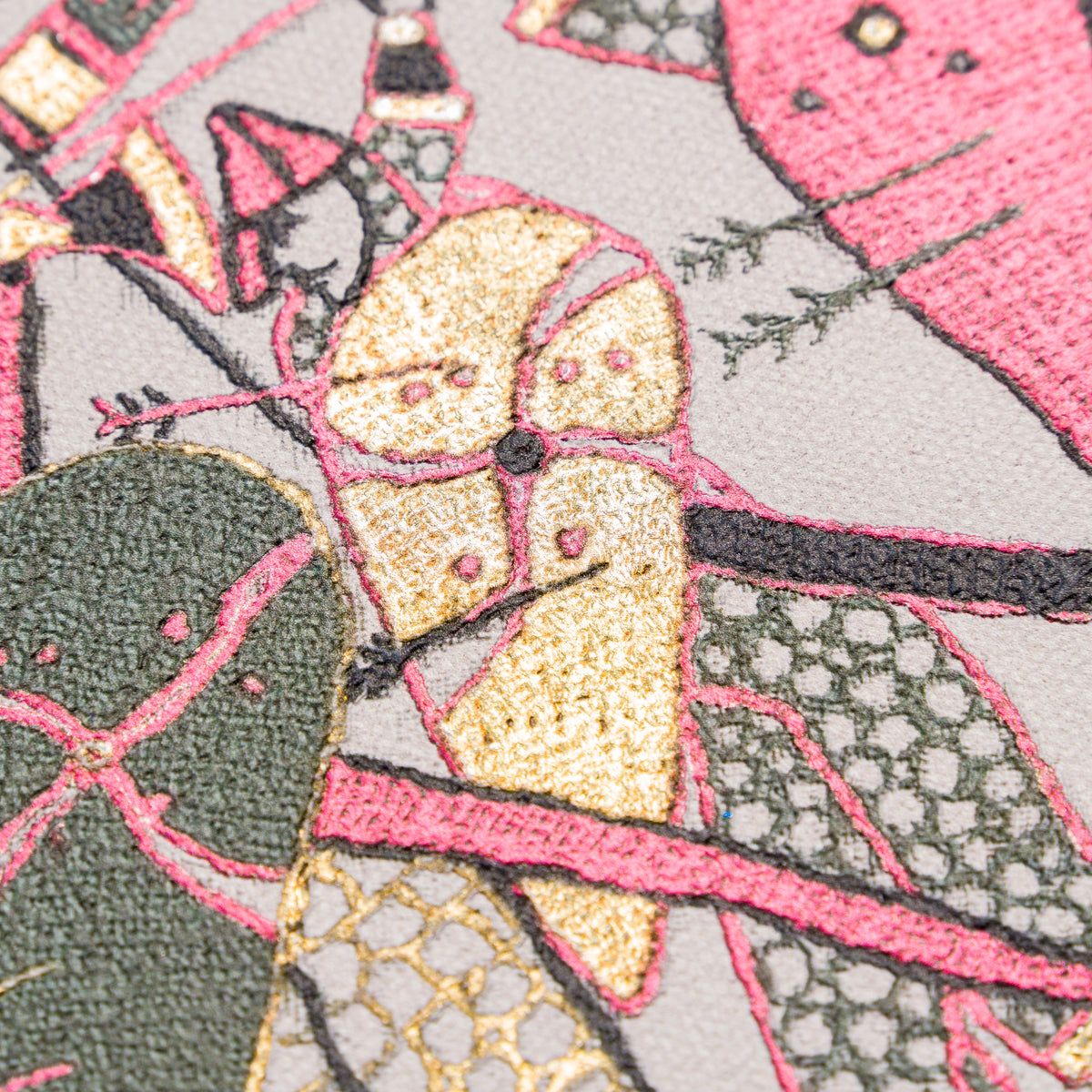
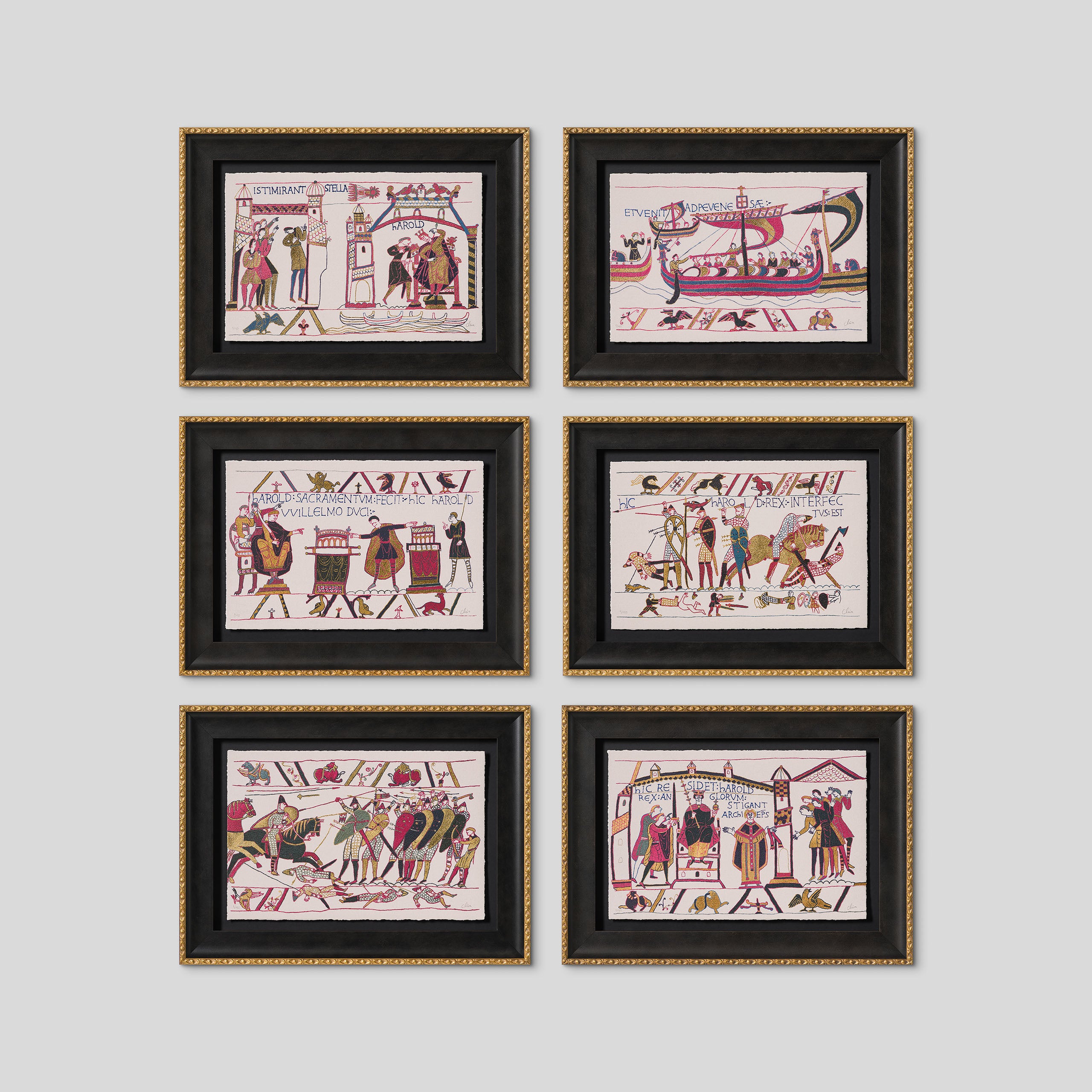
Created in association with the British Museum, Bayeux Illuminated is an exclusive suite of six hand signed limited editions drawn from Mia Hansson’s extraordinary recreation of the Bayeux Tapestry. Reimagining six pivotal scenes from the historic narrative, each work is painstakingly hand-finished with metallic leaf of gold, ruby and sapphire, referencing the luminous surfaces of medieval illuminated manuscripts while giving these ancient images a distinctly contemporary presen
Delivery & Returns
Production & Delivery
All our artwork is made to order in Birmingham, UK, ensuring top quality. Please allow up to six weeks for delivery. Each piece is carefully crafted to meet our high standards.
If you order multiple artworks, they may arrive separately for efficiency.
Returns
We offer a 14-day cooling-off period so you can view the artwork in your home. If it's not right for you, we’ll collect it free of charge or you can return it to one of our galleries.
For international orders, the same policy applies—contact us to arrange collection.
Choose options
Bayeux Illuminated
Sale priceFrom $6,146.00
The Bayeux Tapestry
The Bayeux Tapestry is a monumental work of embroidery, wool yarn stitched onto linen cloth, some seventy metres long and half a metre high. It survives as one of the most vivid pictorial narratives to emerge from eleventh-century Europe, recounting the events leading to William the Conqueror’s Norman Conquest of 1066, including the Battle of Hastings and the death of King Harold Godwinson.
The work is generally believed to have been commissioned by Bishop Odo of Bayeux, half-brother of William the Conqueror, and likely produced in Canterbury, England, by Anglo-Saxon embroiderers working in the years following the Conquest. This origin gives the Tapestry an intriguing double character: it tells a Norman story of Conquest and legitimacy, yet it does so through the handwork of English embroiderers.
The main narrative carries the political and military story of Harold’s journey to Normandy, his oath to William, his subsequent betrayal and coronation in England, and the inevitable invasion that follows.
Today housed in Bayeux, France, the Tapestry remains a touchstone for historians of medieval warfare, textile art, and visual storytelling, celebrated as much for its artistry as for its historic value. In 2026, the Tapestry returned to England, believed to be for the first time since it was created almost 1,000 years ago, where it is on loan to the British Museum from September 2026 to July 2027.

Hastings
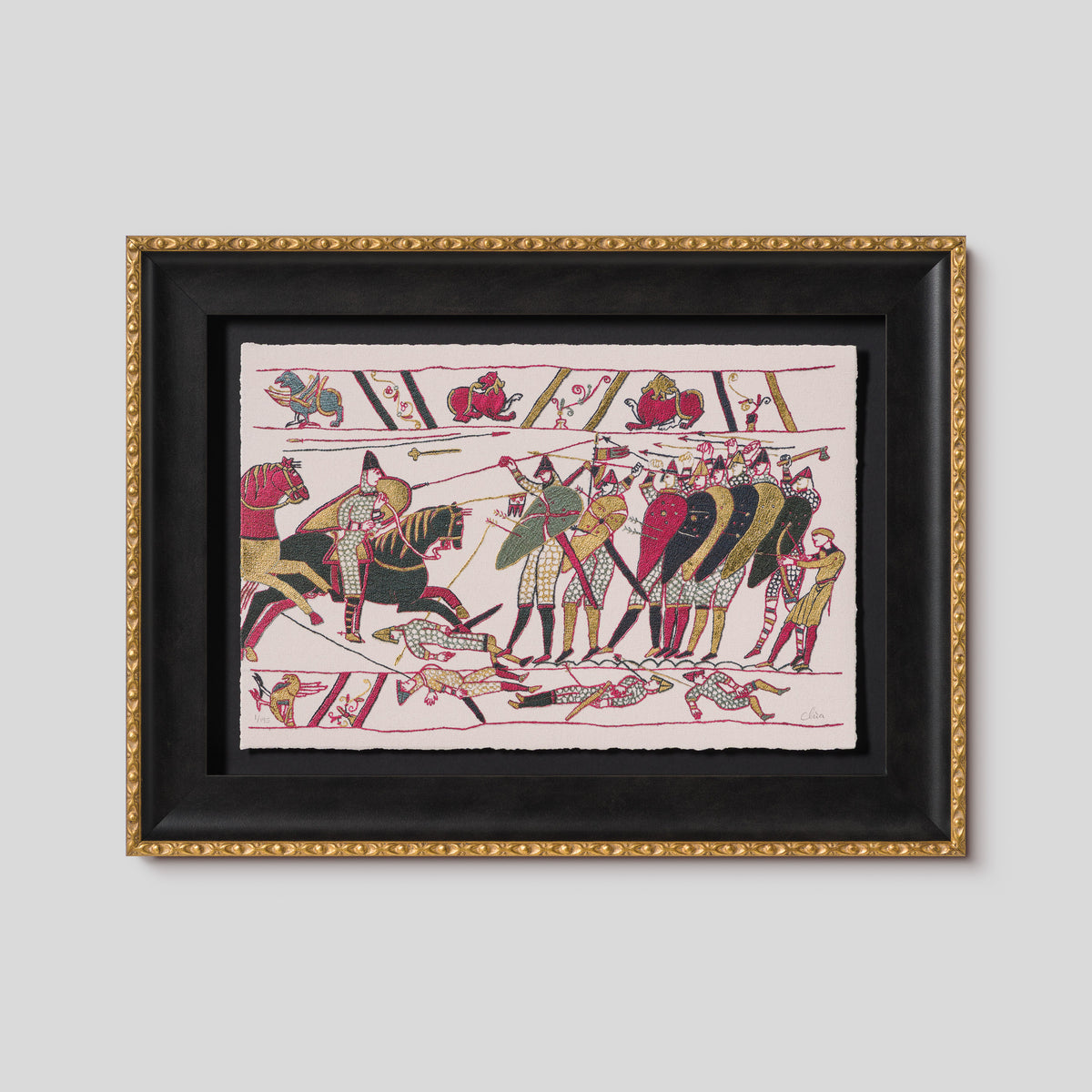
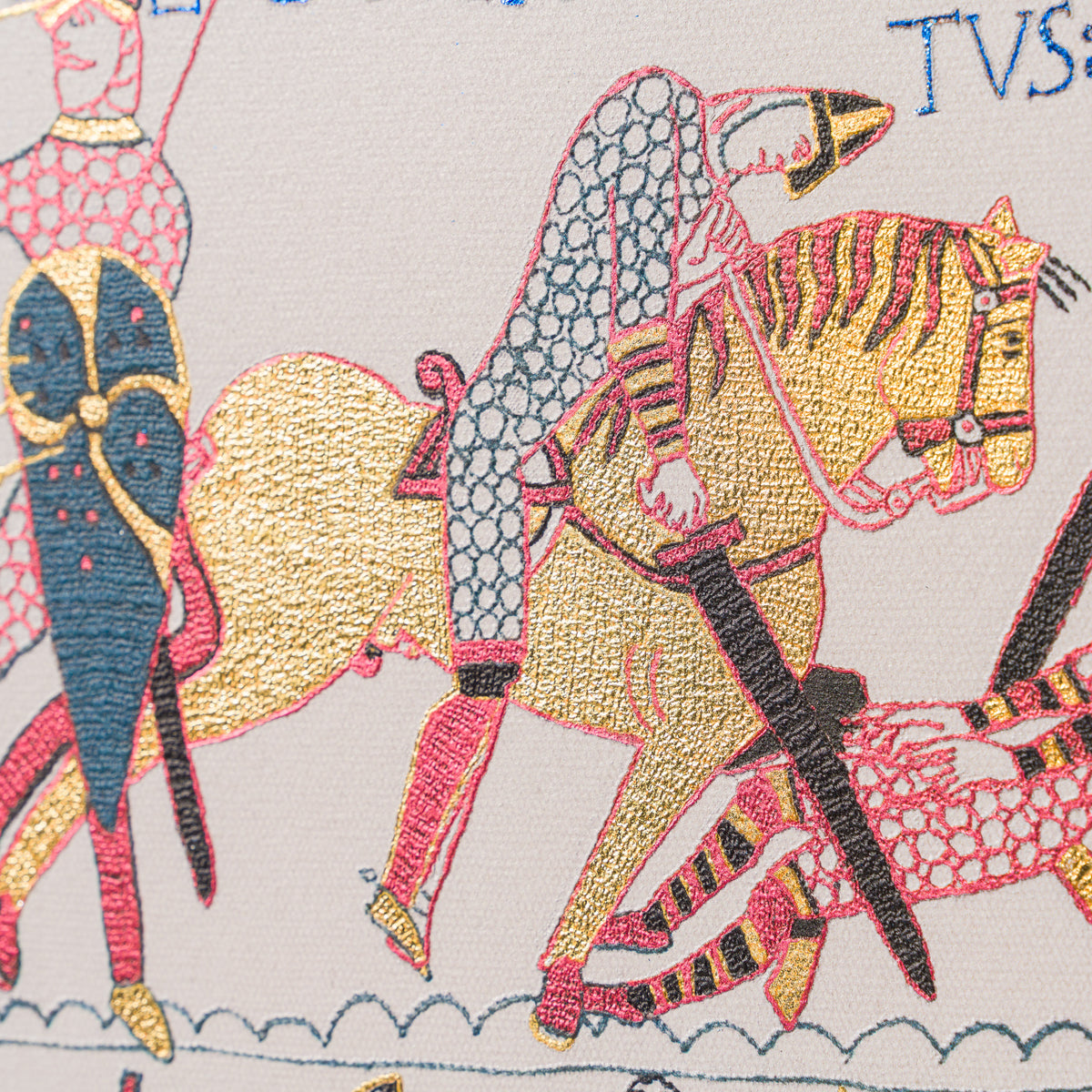
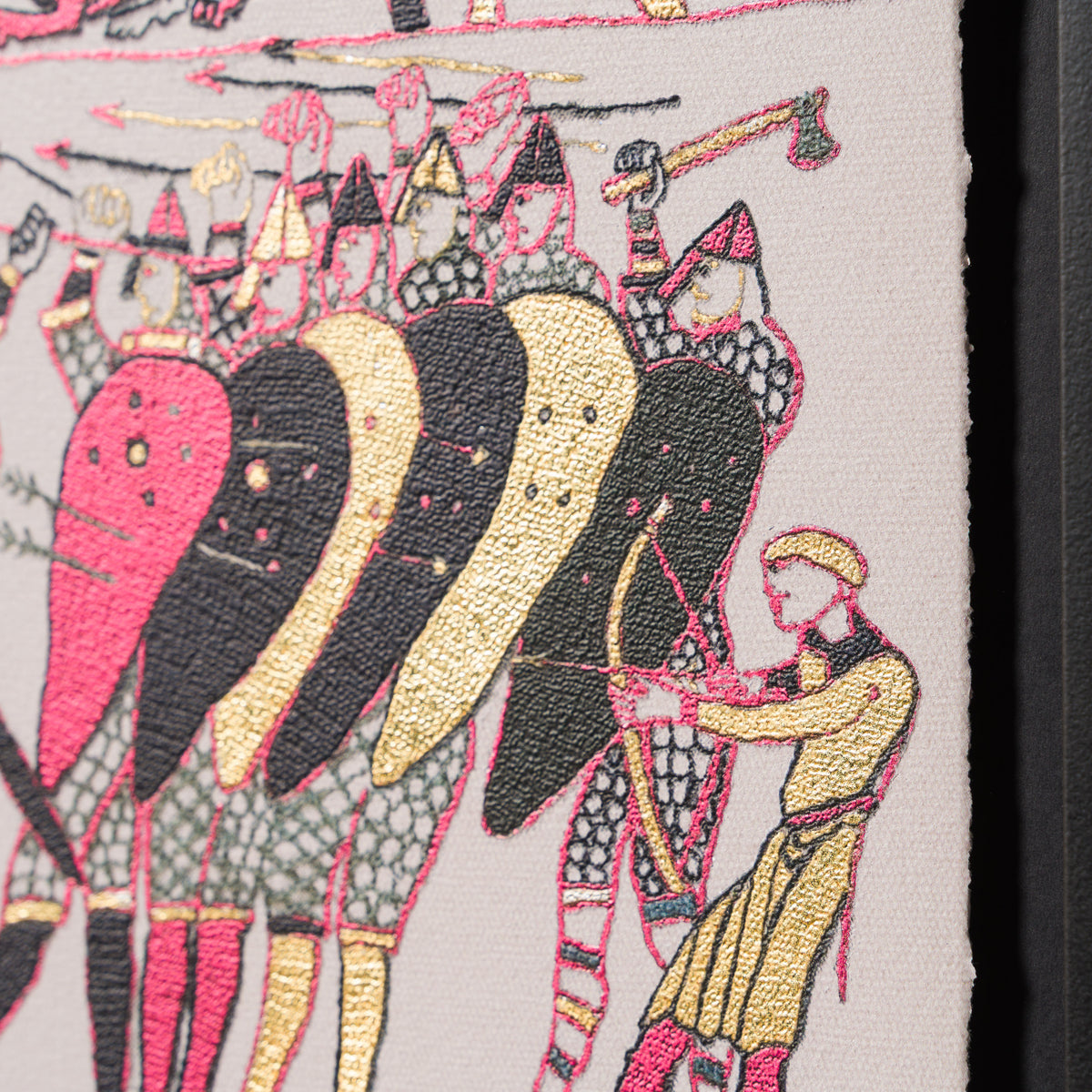
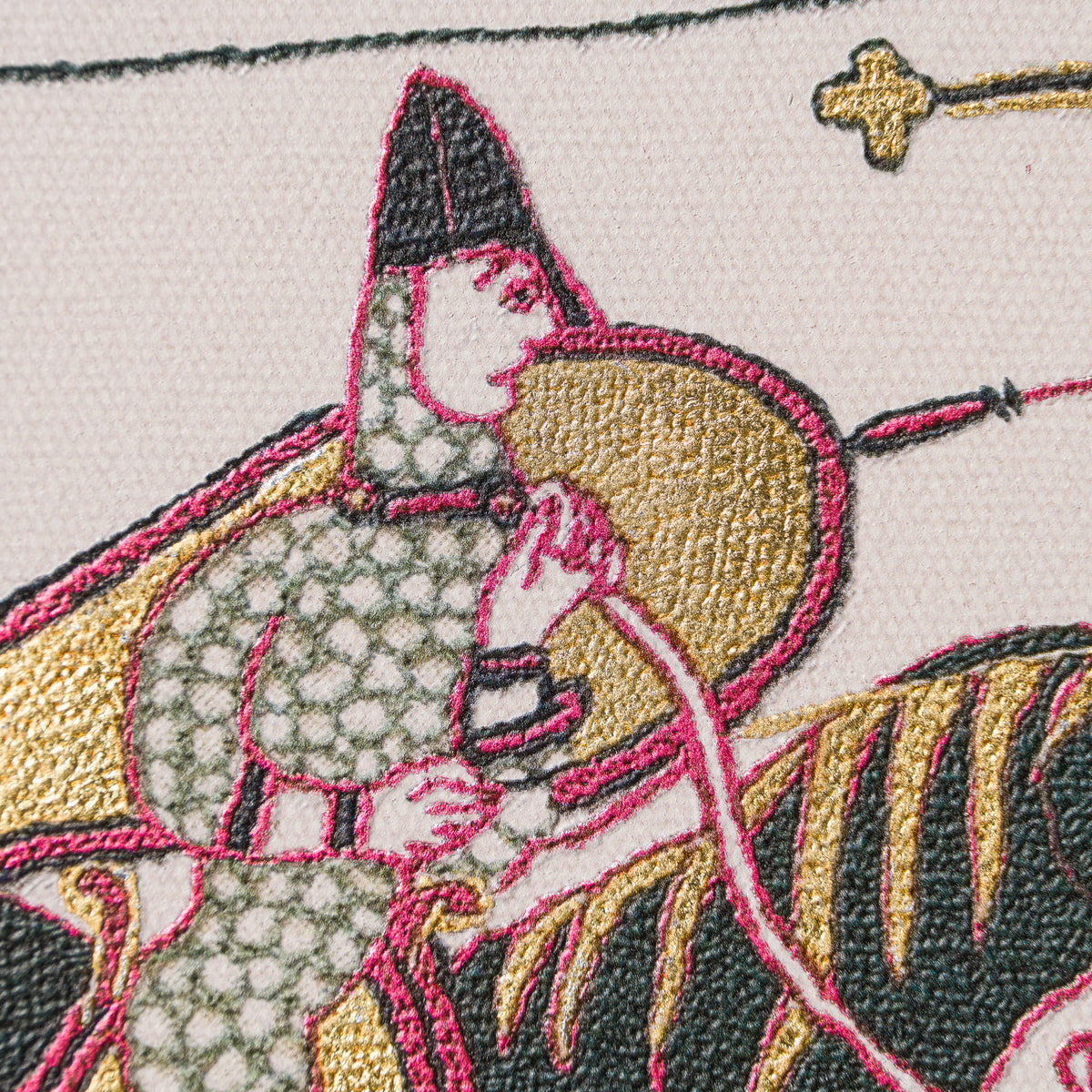
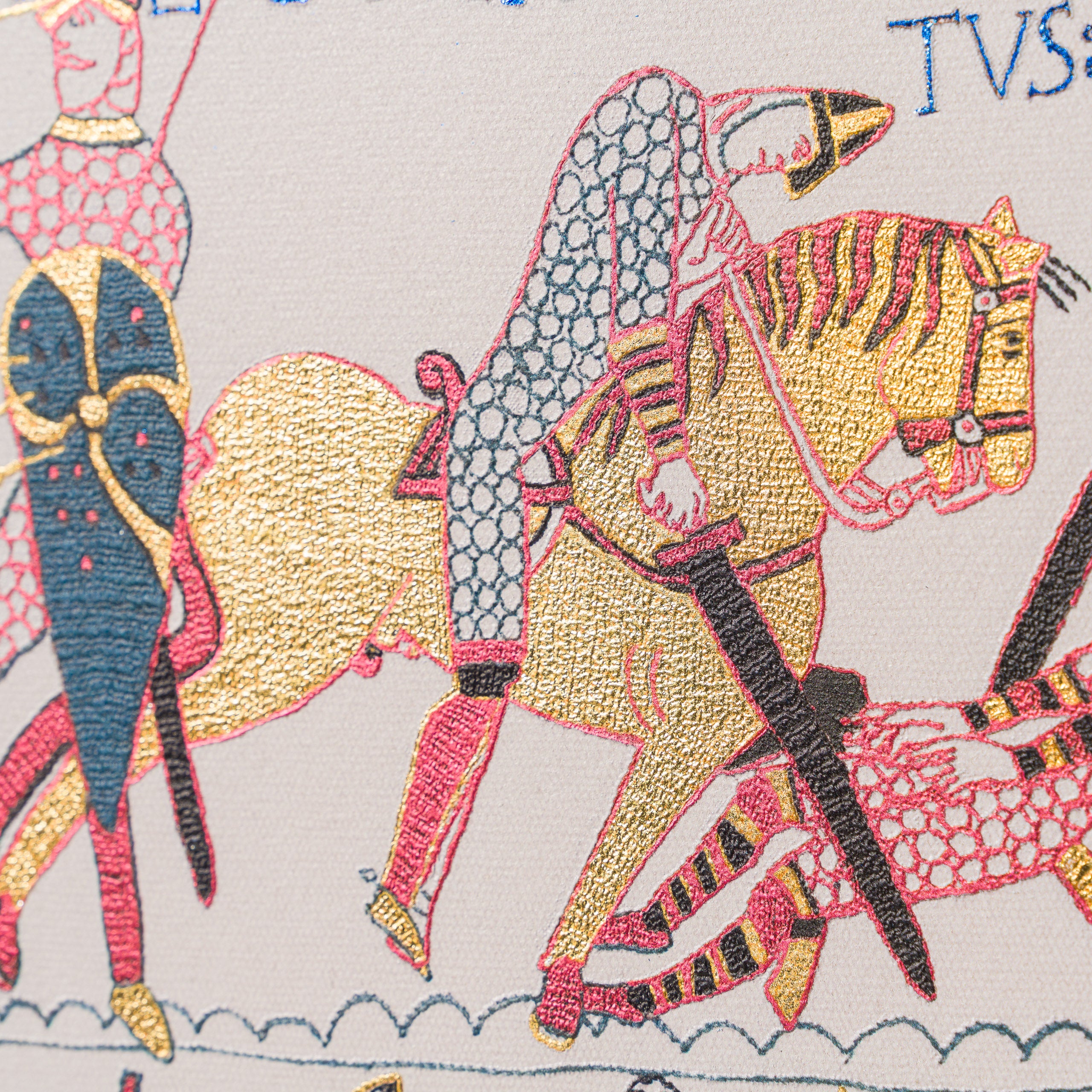
At the Battle of Hastings on 14th October 1066, William’s cavalry, identifiable on horseback, clash with Harold’s Anglo-Saxon infantrymen on foot. The contrast between these two styles of fighting is employed as a symbolic form of propaganda: the Normans are shown as powerful, agile and versatile as they rush the English defences, which have begun to break apart, allowing a breach in their defence. Throughout the rest of the Tapestry, the borders either side of the scenes are a symbolic space containing narrative and moralistic motifs. In this scene, however, the borders function more literally, filling with the overflowing corpses from the battle.
Coronation
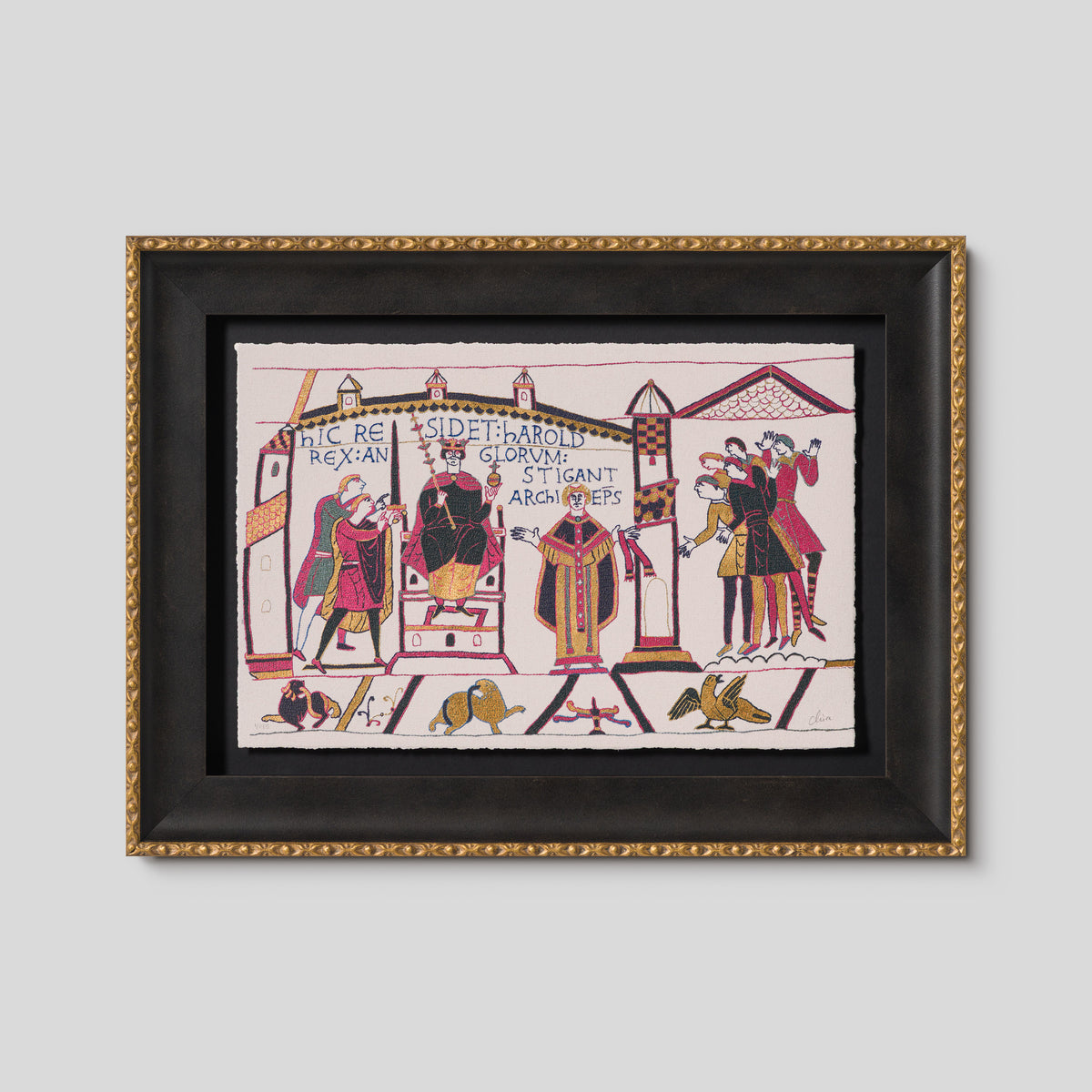
Following the oath that he swore in Bayeux, Normandy, Harold returns to England where he is at the aging King Edward’s bedside as he passes away. It is thought that Edward’s final action was to bequeath the English crown to Harold, who willingly accepted, and was crowned the very next day on 6th January 1066. Coronation depicts this moment, as Harold sits on his throne wearing the royal crown and holding an orb and a sceptre, symbols of Christian rule and royal authority. The new King’s loyal subjects offer him praise from the edges of the scene. Beside King Harold stands Archbishop Stigand, the Anglo-Saxon Archbishop of Canterbury who is believed to have officiated the ceremony. Aside from the fact that Harold had broken his sworn oath to William by accepting the English crown, William and the Normans claimed that the Archbishop’s presence invalidated Harold’s coronation as King of England, as Stigand had been excommunicated by the papacy, which refused to recognise his legitimacy.
oATH
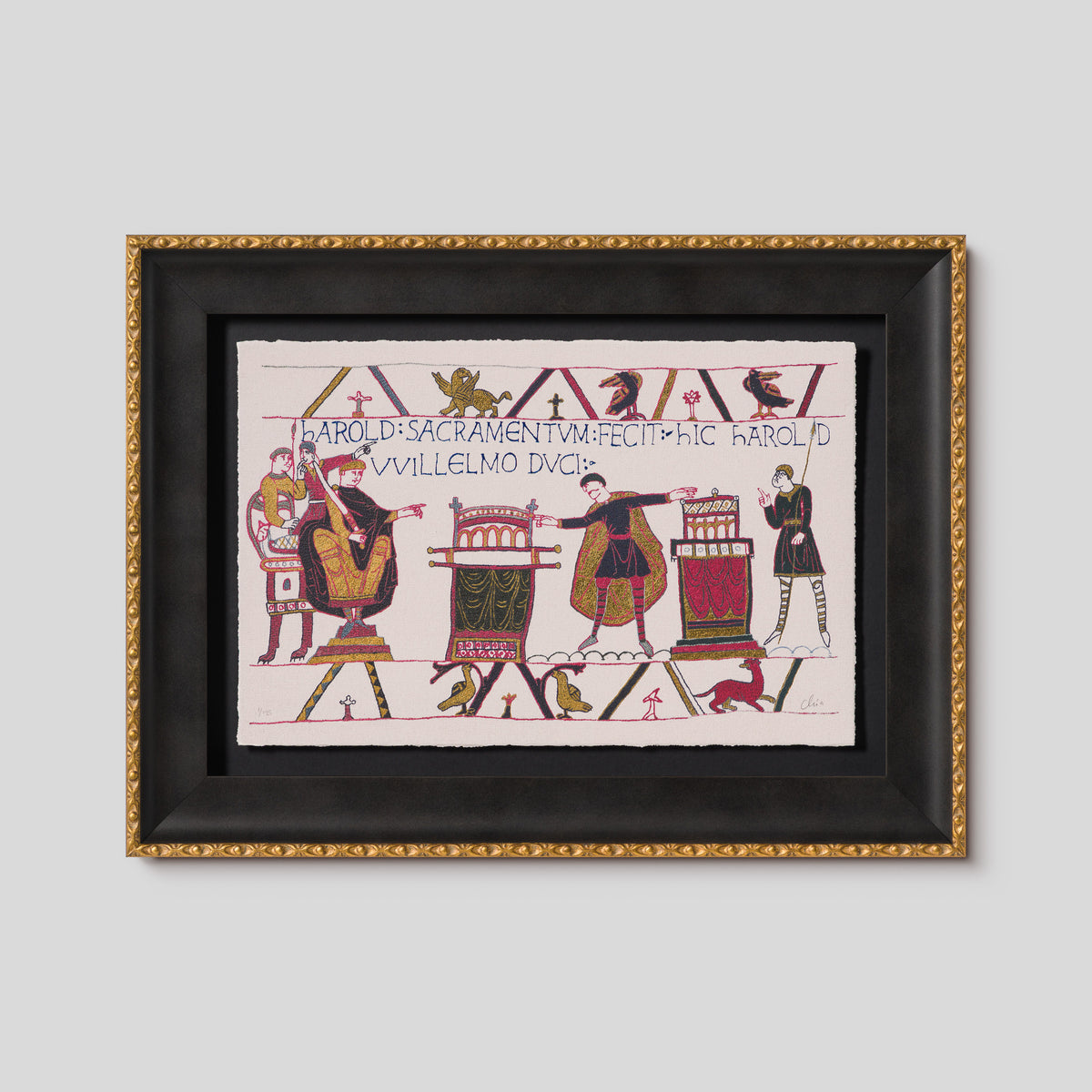
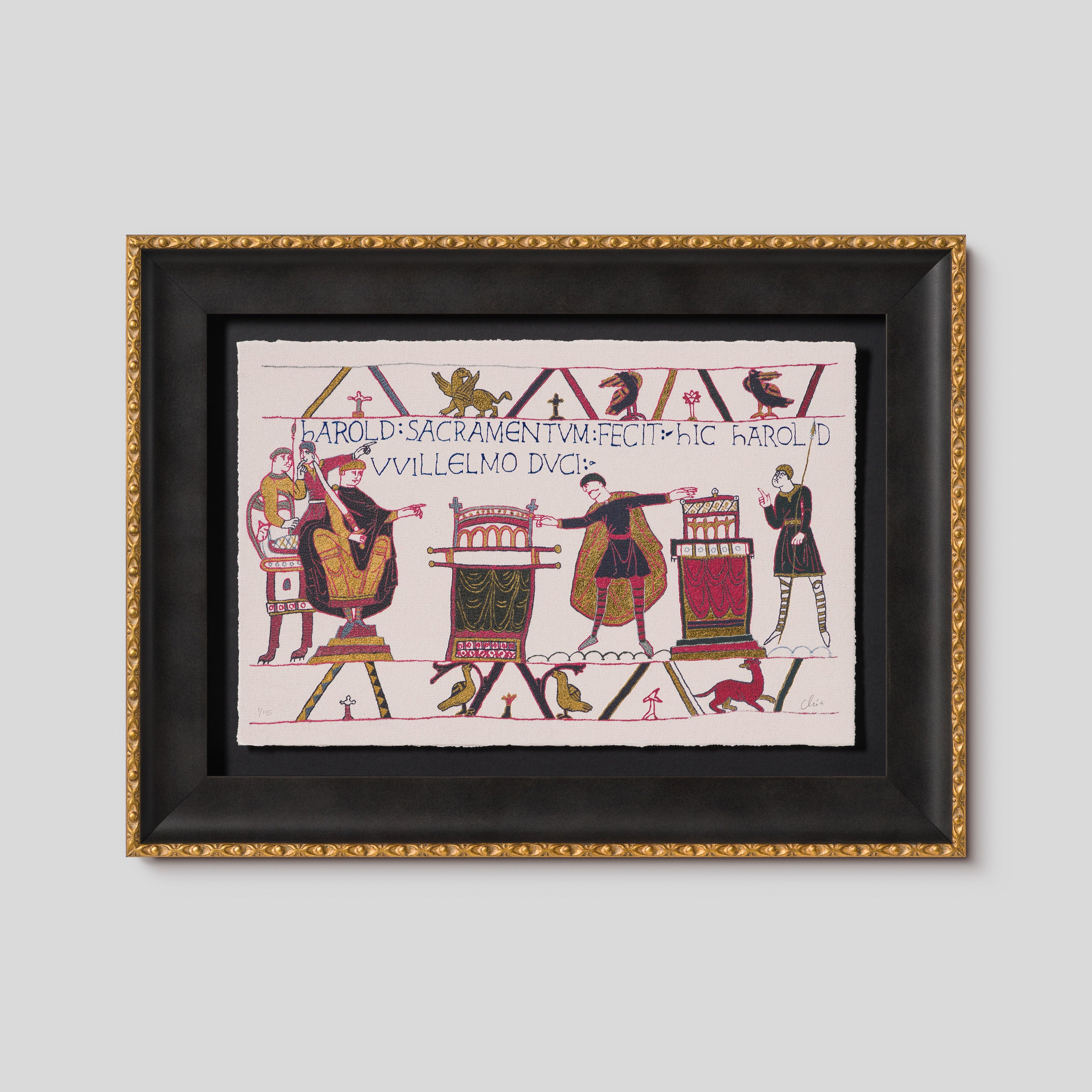
Oath depicts the moment that Harold Godwinson, then Earl of Wessex and an English nobleman, swore a sacred oath to support William, Duke of Normandy’s claim to the English throne. Harold is seen in the centre, making his binding promise as he rests his hands upon two holy relics. This was considered an unbreakable oath in medieval law. William sits upon his throne overlooking Harold from a position of power. Holding a sword or a staff in his hand, he compels Harold to swear his fealty. The Latin inscription above the scene reads ‘Harold sacramentum fecit hic Harold Willelmo duci’ (‘Here Harold swore an oath to Duke William’). This moment in the Tapestry marks a dramatic turning point in the narrative, as Harold will later break his oath.
William
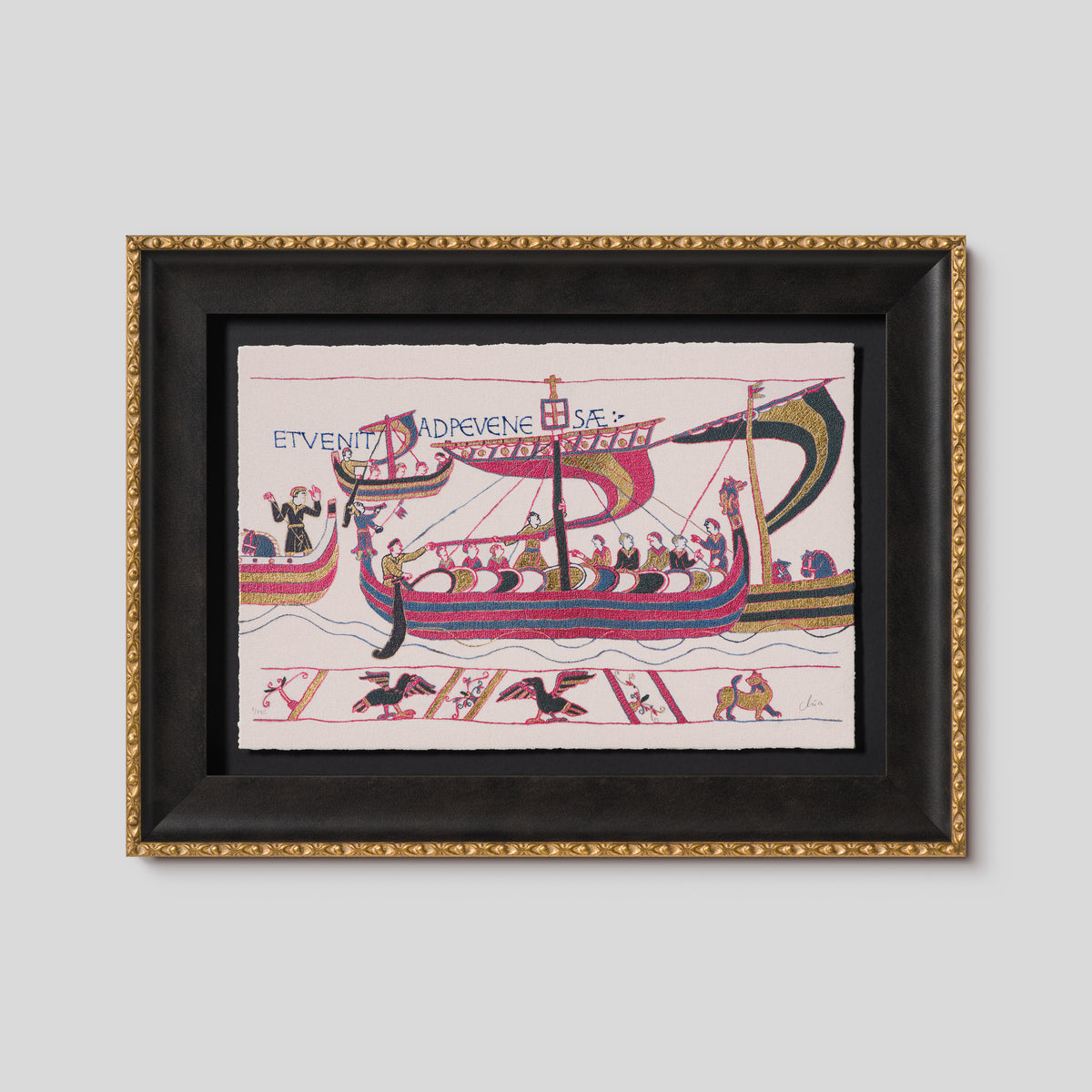
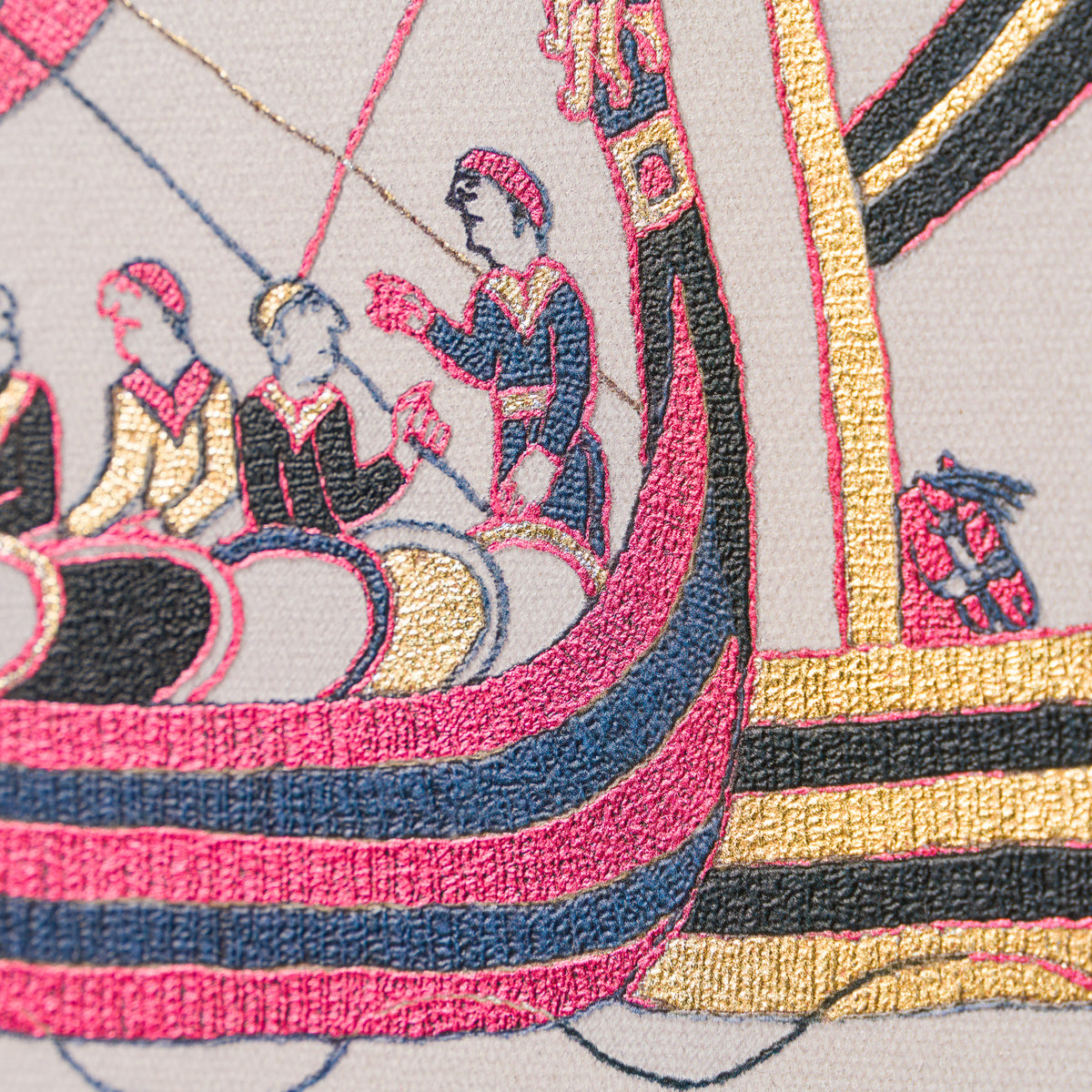
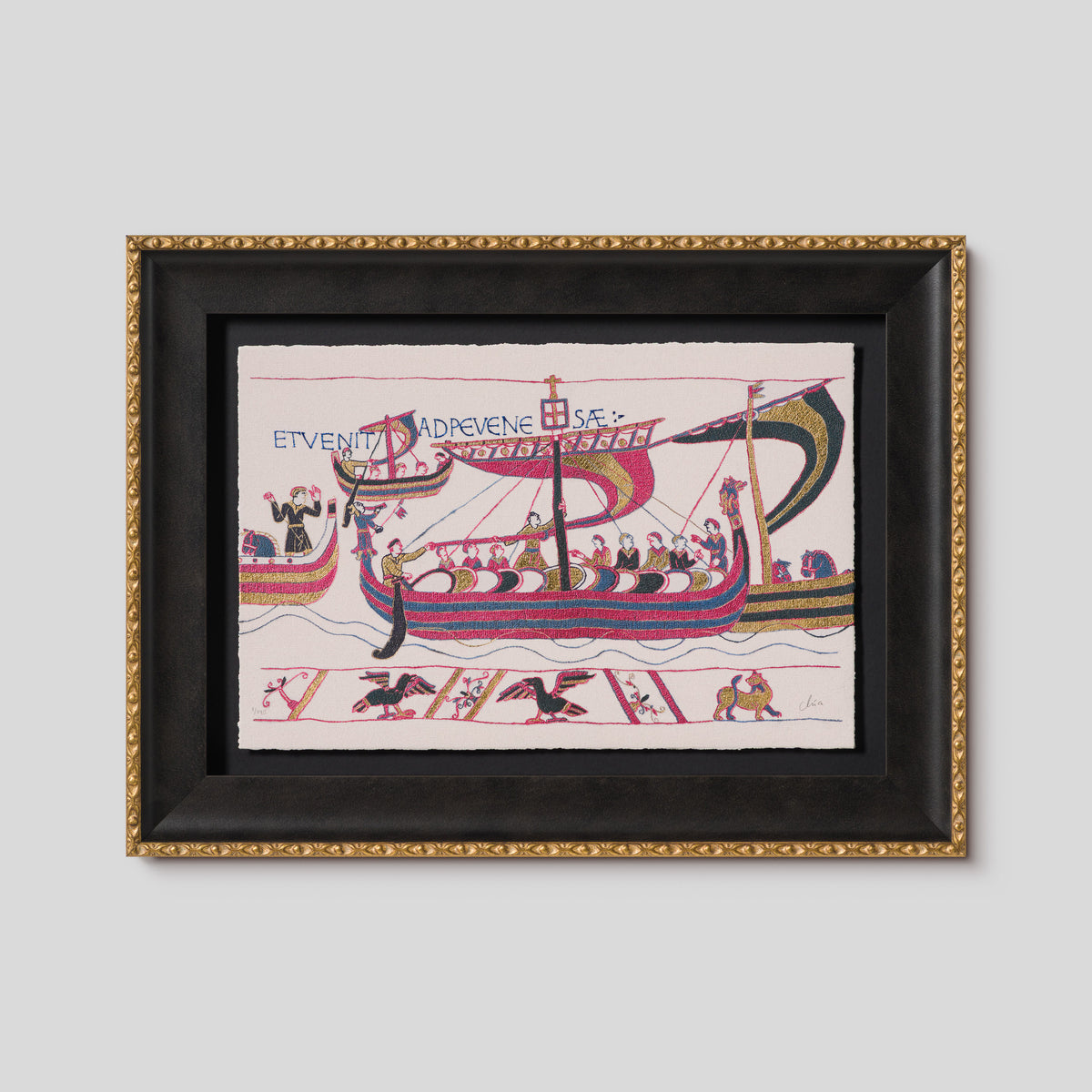
As news of Harold’s betrayal is carried across the sea to Normandy, William begins building a large fleet of invasion ships before he sets sail for the southern coast of England. William depicts his army’s passage across the Channel in their Viking-inspired ships. The formidable English fleet that guarded the coast failed to intercept William’s army, who waited for the winds to change and set sail under the cover of darkness. The scene’s Latin inscription, ‘Et venit ad Pevenesae’ translates to ‘and he came to Pevensey’, a village in East Sussex, England, and tells of how William’s armada landed on English soil on 28th September 1066. They marched east along the coast, where, to defend their position, they set about building a fortification at Hastings, the first Norman-style castle to be built in England.
Harold
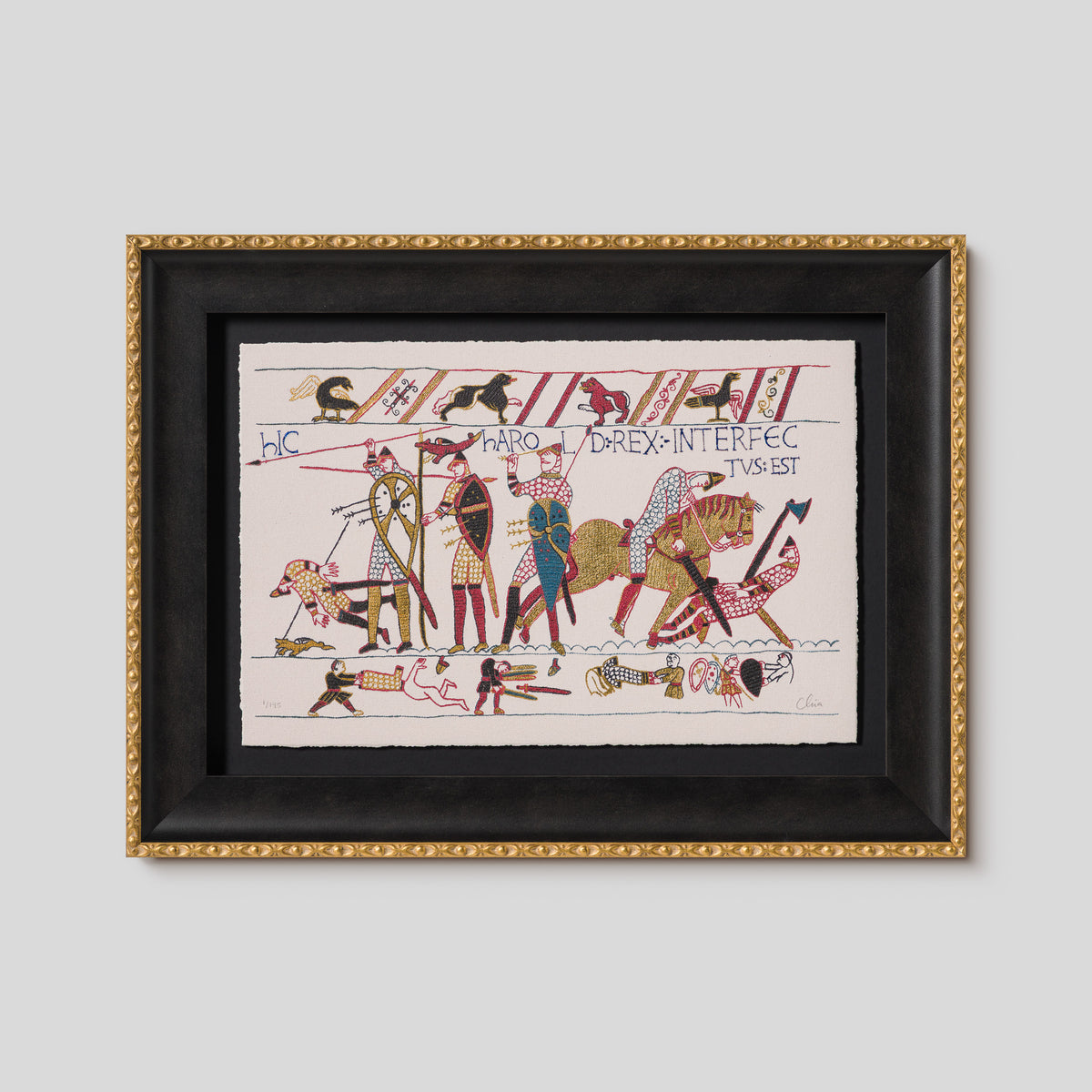
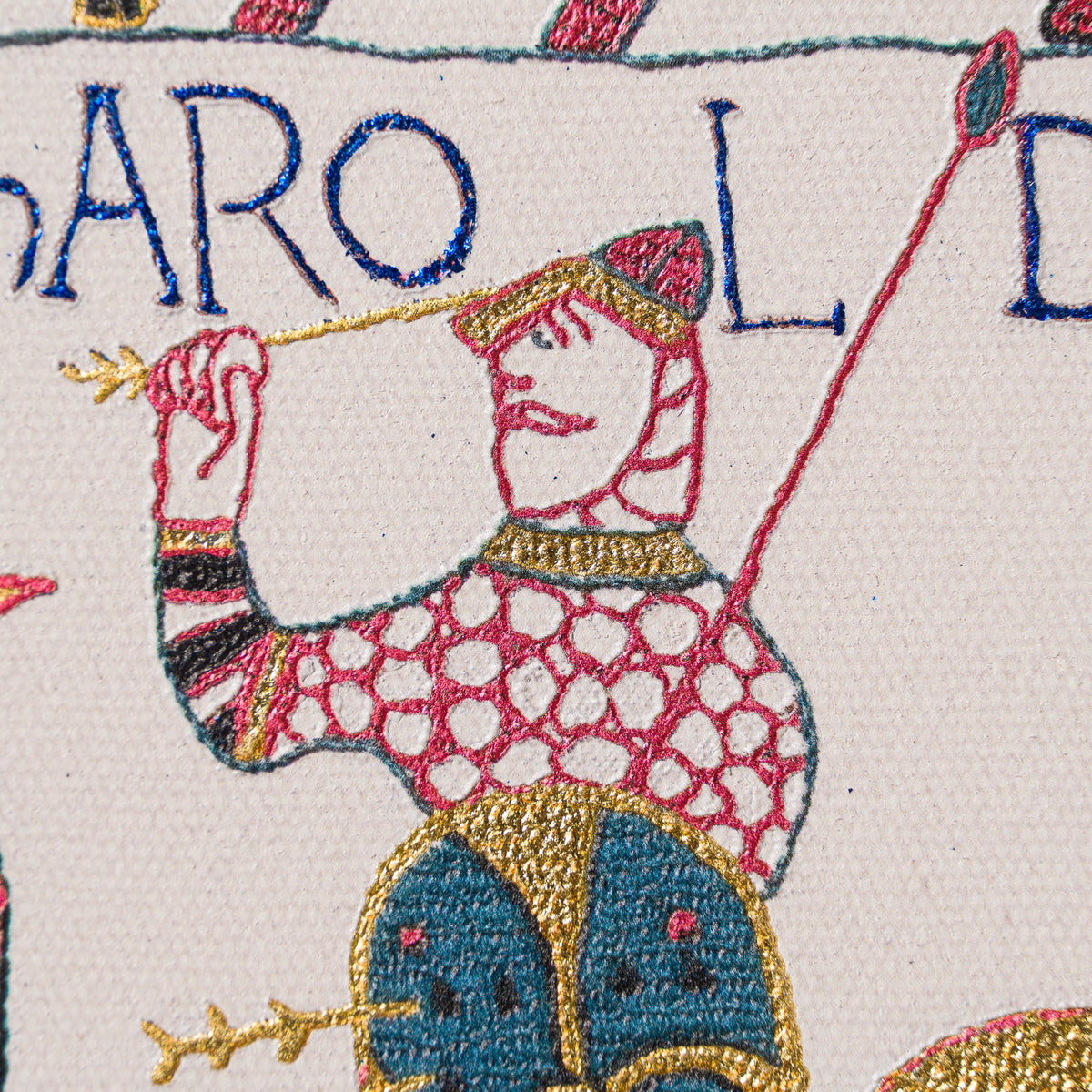
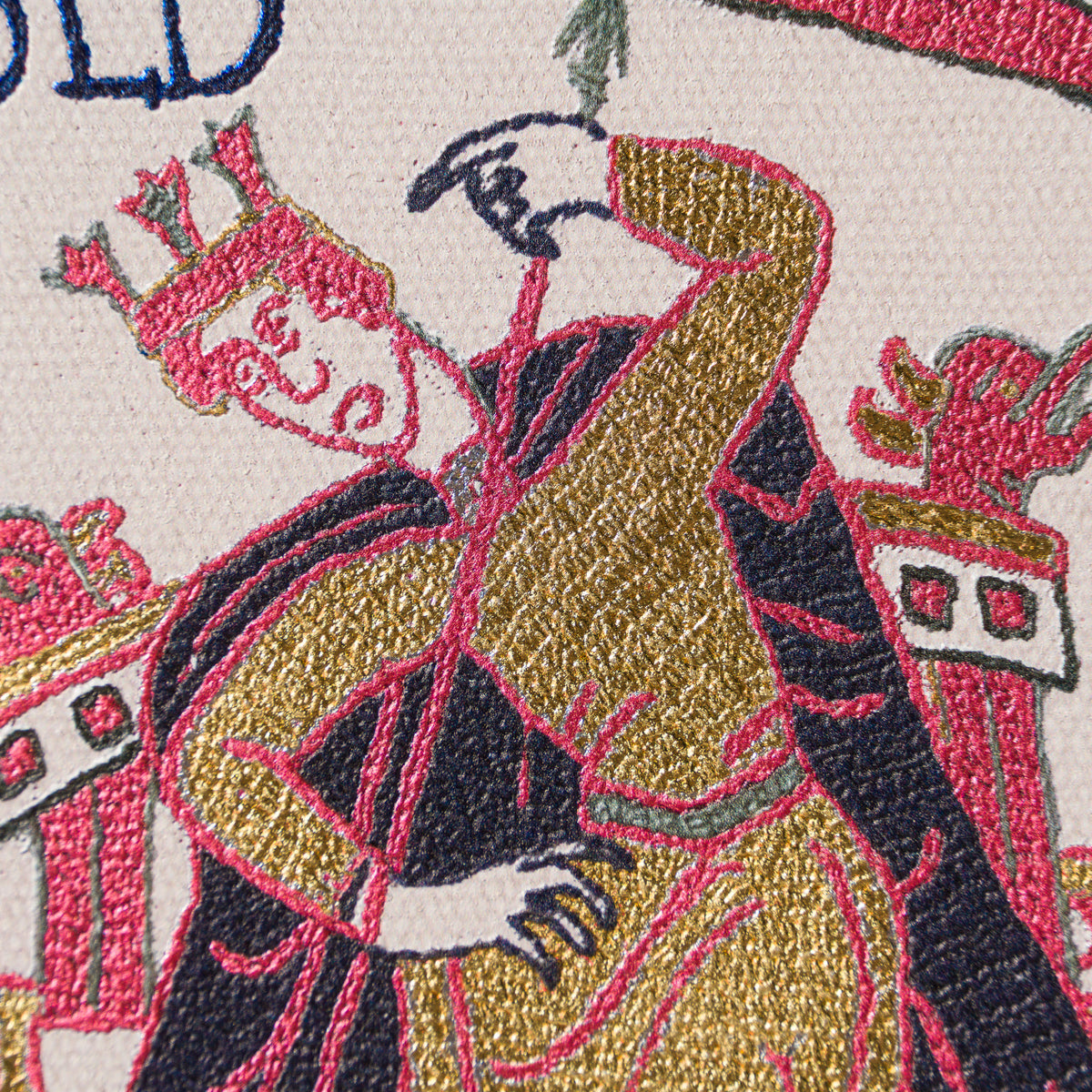
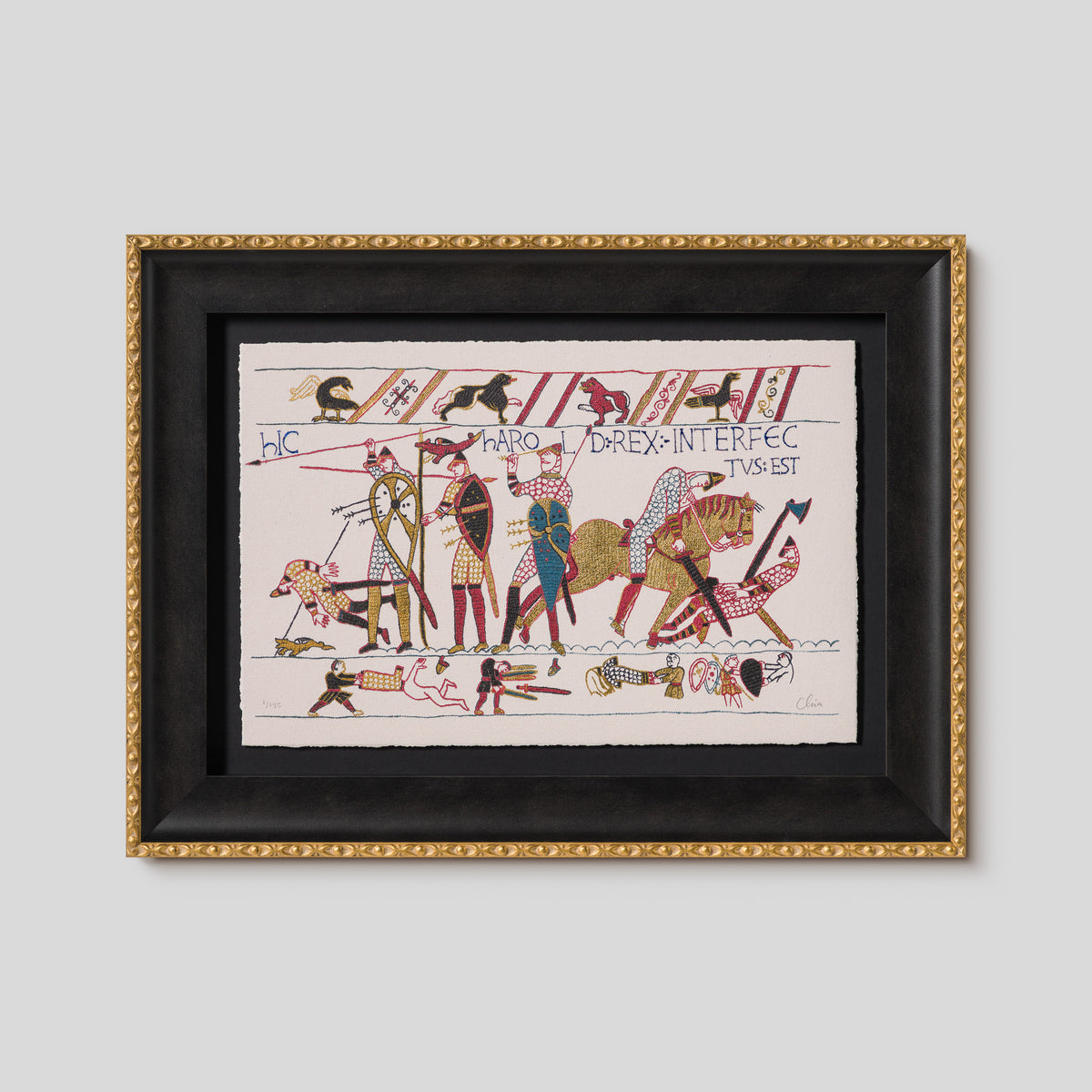
Harold is one of the most famous scenes in the entire Bayeux Tapestry, depicting the culmination of the Battle of Hastings and the moment in which Harold is killed. According to myth, Harold was shot through the eye with an arrow, suggesting that he may be the figure seen in the centre. It is possible that this story was a form of Norman propaganda which sought to dramatise Harold’s death and the ultimate revenge for the betrayal of his sacred oath. There is some debate as to whether the figure on the right, who is cut down by a Norman knight, may also represent Harold. The inscription above reads simply, ‘Hic Harold Rex interfectus est’ (‘Here King Harold was killed’). Marking the climax of the battle and the triumph of William over Harold, the lower borders in this scene exhibit the death and destruction of the conflict.
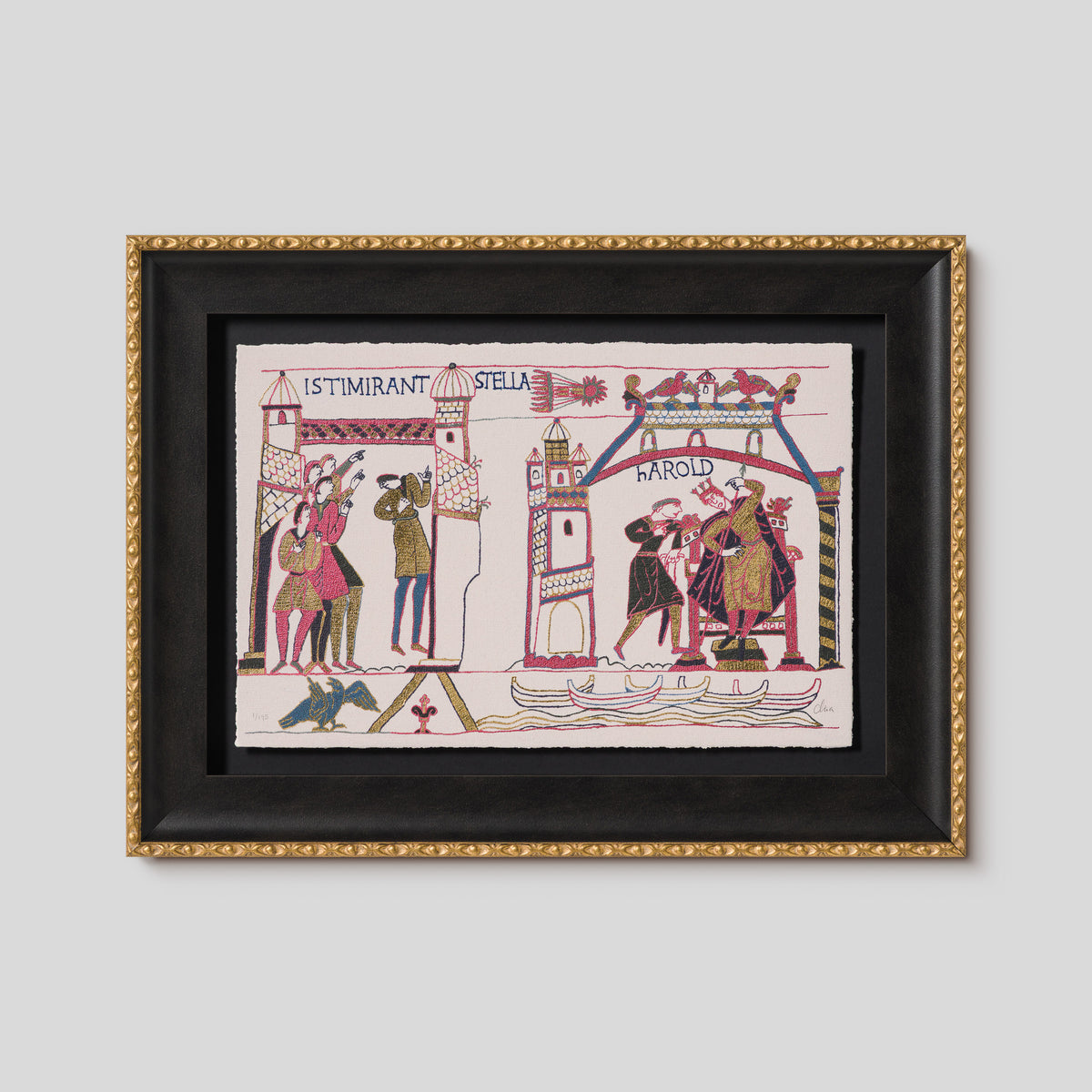
cOMET
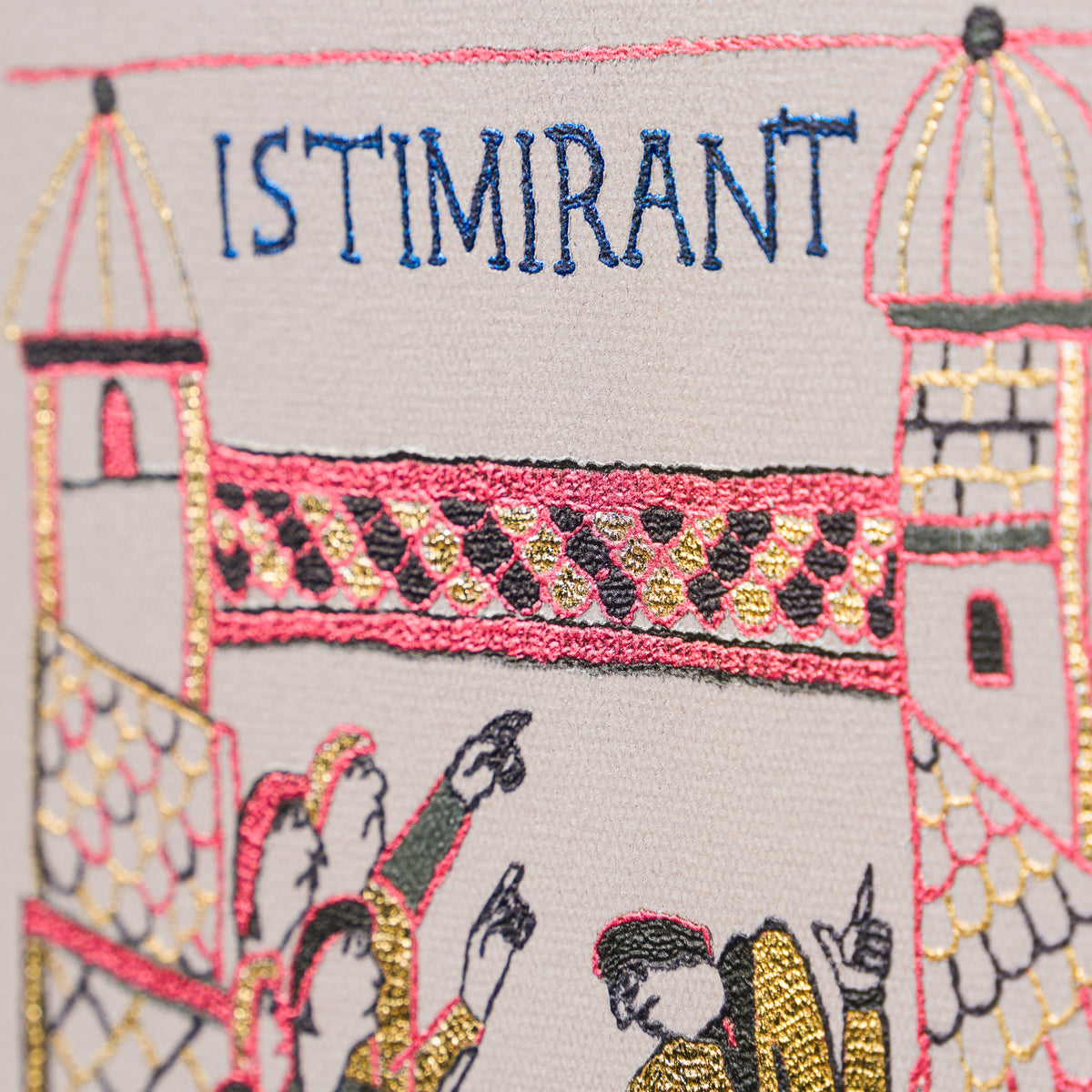
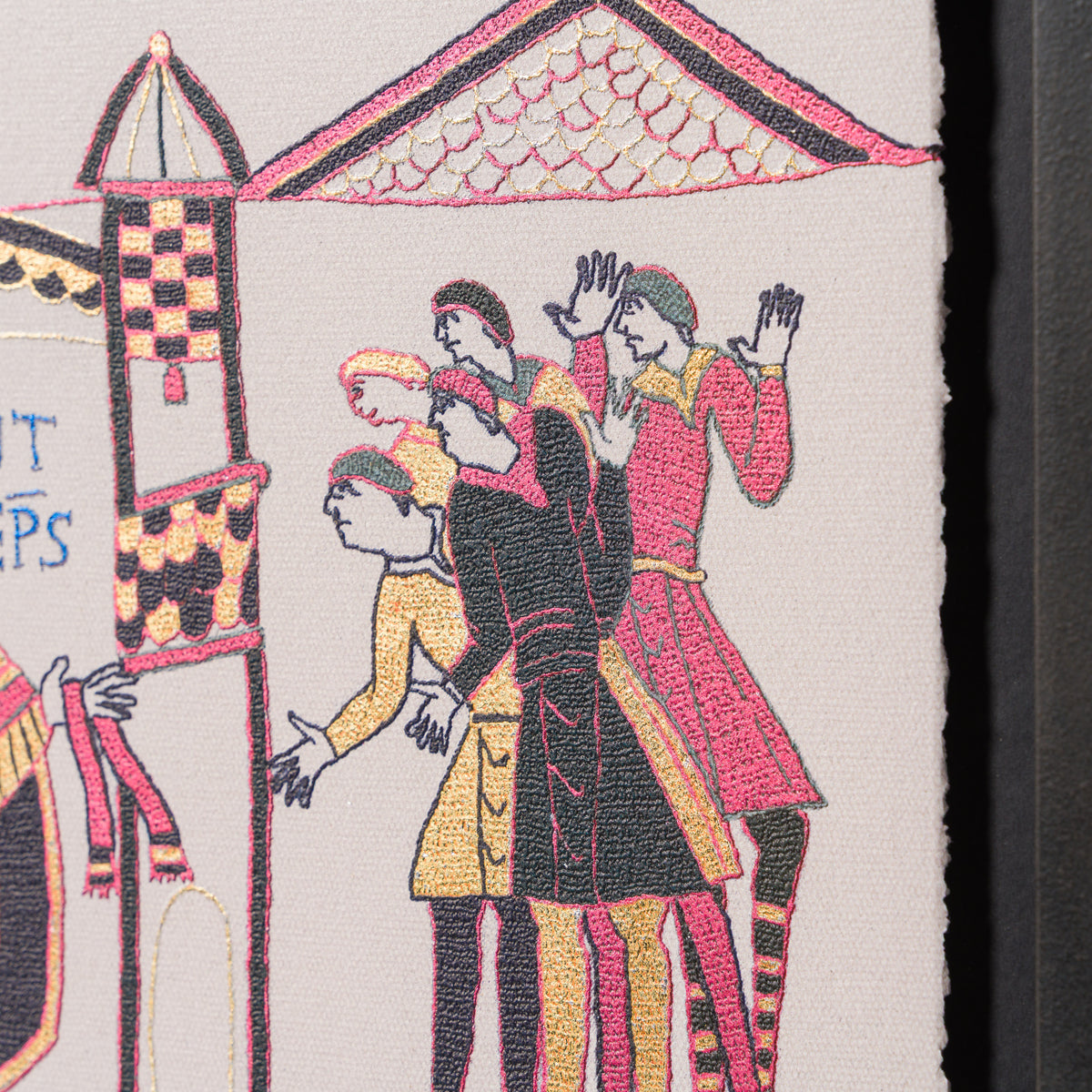
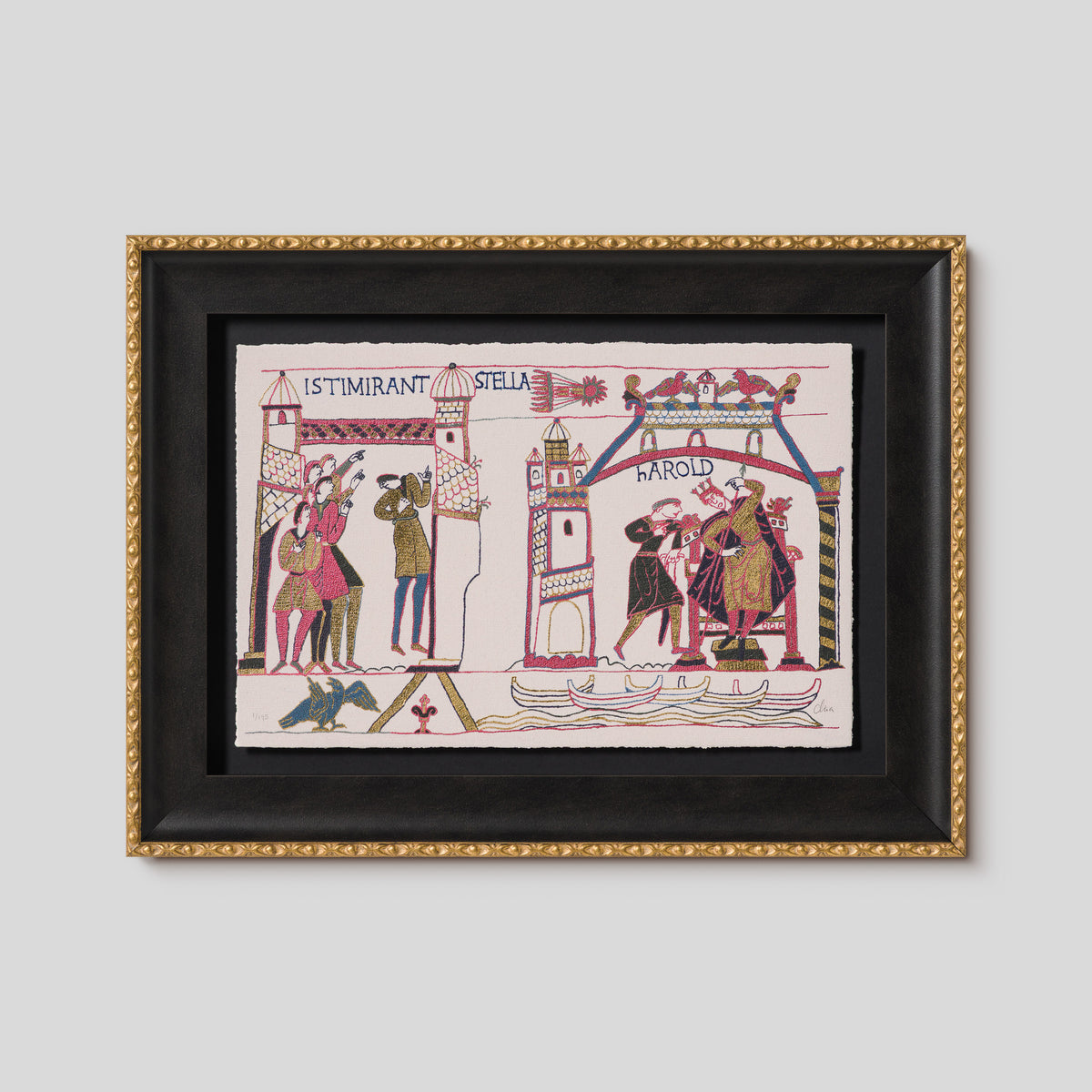
According to the Bayeux Tapestry, immediately after the coronation ceremony, Halley’s Comet is witnessed tracing through the sky in the Comet scene. This was the first time that Halley’s Comet was ever depicted in visual art. In ancient and medieval society, sightings of comets were understood as ill omens, often signalling a forthcoming famine, plague, war or the death of a king. On the left of the scene, a group of figures gazes up at the shooting star, pointing with a mixture of awe and terror. The inscription above reads ‘Isti Mirant Stella’, meaning ‘They marvelled at the star’. Harold can be seen sitting on his throne on the right of the scene, as one of his courtiers nervously informs him of the omen, or indeed of the Norman invasion itself. Below, in the borders of the work are a series of ghostly ships, a premonition of an impending Norman invasion. For William, the sighting of Halley’s Comet provided the divine justification that he needed to support his right to take the English throne from Harold.
The artist
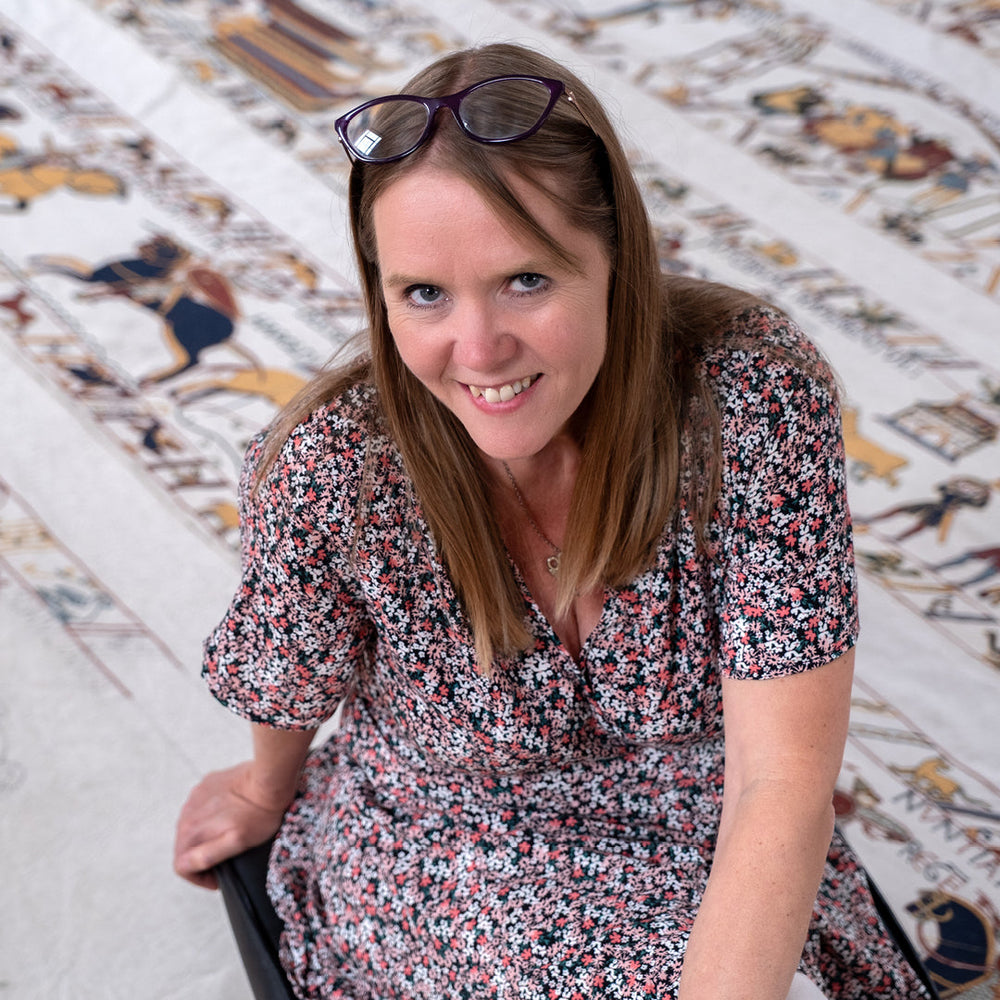
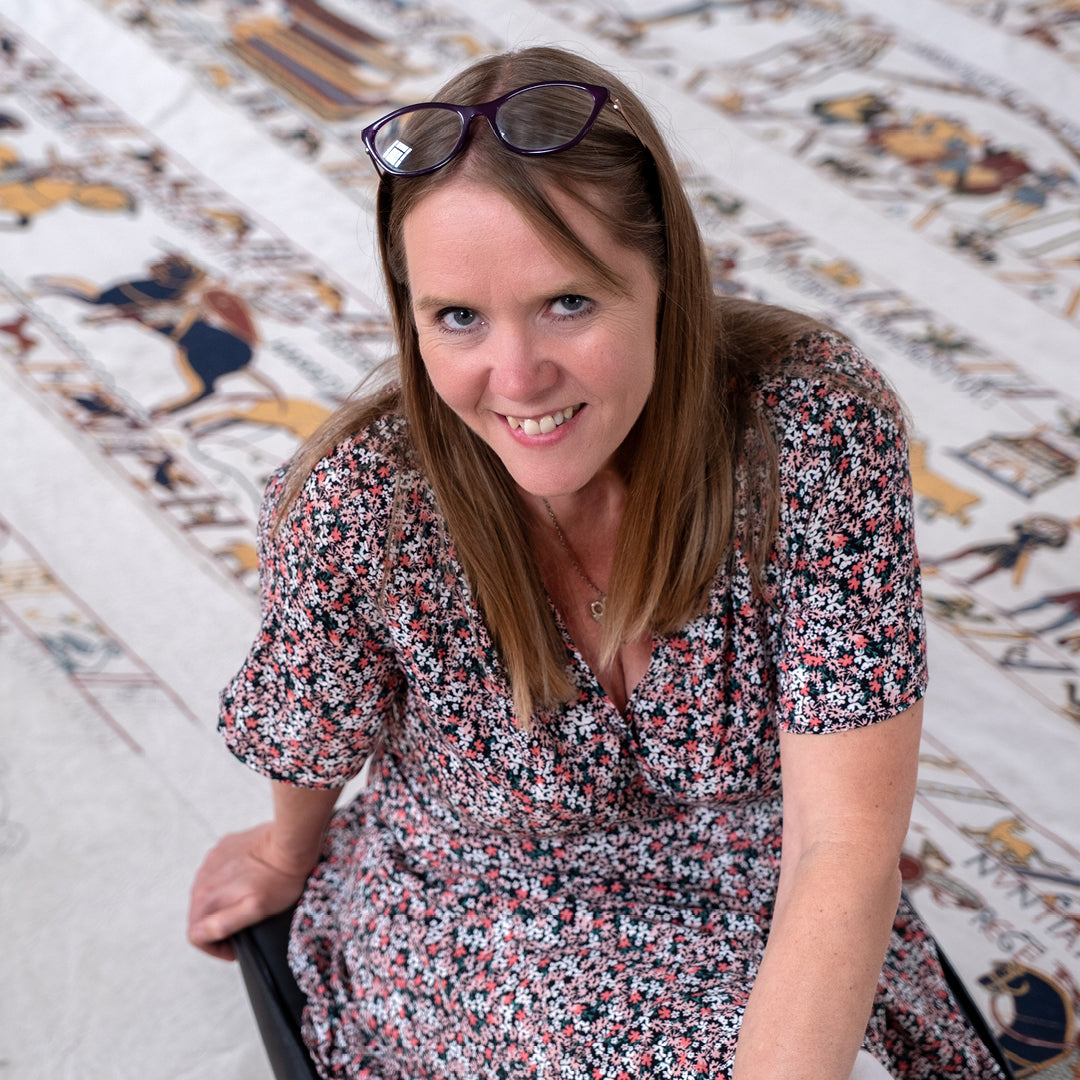
Mia Hansson
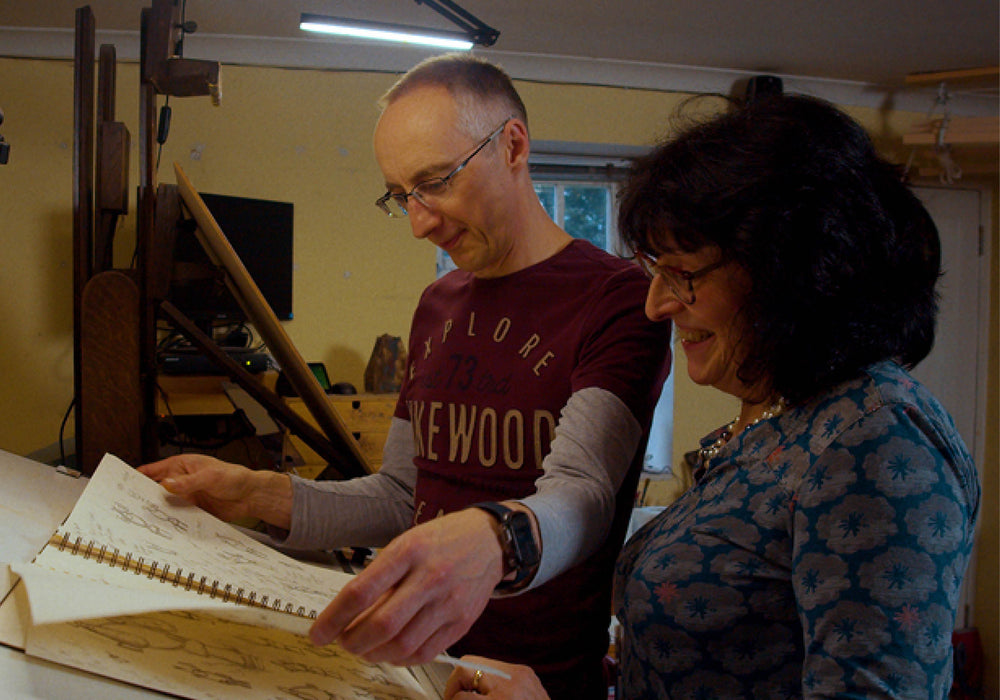
Mia Hansson (b. 1974) is a Swedish textile artist, storyteller and illustrator. Hansson was born and raised in Skanör, Sweden’s southernmost point. Her introduction to cross-stitch began young: when Hansson was five, her grandmother, Greta, introduced her to the technique, and the lessons have stayed with the artist to this day. Hansson is a fourth-generation needleworker: her great-grandmother was a quilter, her grandmother was a knitter and crocheter, as was her mother, who also made her own clothes.
View the artist
Recently viewed
Need help?
Frequently Asked Questions
At checkout, you'll have the option to have your order delivered to your home or to collect it from one of our galleries across the UK. For more information on delivery, visit our delivery page here.
Yes, Castle Fine Art is based in the UK, but we ship internationally. All of our international orders are delivered via DHL.
To ensure a secure transit, every artwork is handled with utmost care. We take precautionary measures by using foam around the piece for added safety during transportation, and then the artwork(s) are packaged in double-walled, reinforced cardboard boxes that offer superior protection. All of this ensures that your artwork arrives safely.
Most artwork orders will need to be professionally mounted and framed before being dispatched, so delivery can take up to four weeks from the date you placed your order, but we do strive to deliver your order as soon as we can.
Books and gift cards are delivered within 2-3 working days. Please note, if multiple artworks are purchased within the same order, they may be delivered separately for efficient delivery.
The majority of our originals and limited editions are hand signed by the artist themselves. On some occasions where we have limited edition sculptures, this is hand written into the mould before production. If you're unsure, please contact us.

30 years of fantastic art
In 1995, we opened our first-ever gallery in Stratford-upon-Avon. With just one goal in mind - to make our art accessible to all - our fledgling company began to spread its roots.

Craftsmanship and Quality
Every piece of art is mounted, glazed or framed by hand, with our bespoke framing service selected by our creative department.

Built to last
Our foundations are built on a passion for art, and many of our staff (and collectors!) have been with us from the very beginning.

Free Delivery
Free UK delivery on all artwork and sculpture orders